 qerranews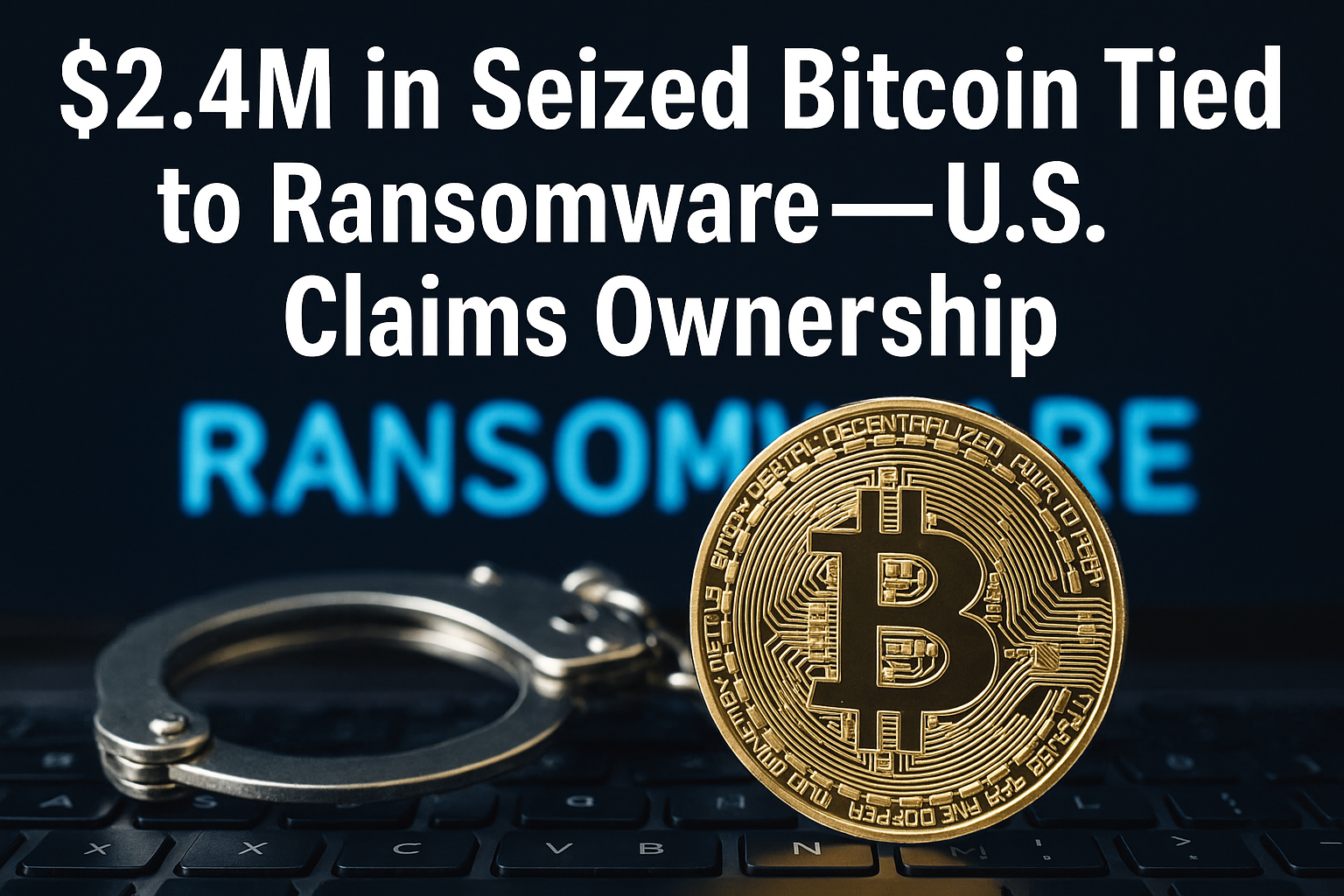
$2.4M Bitcoin Seizure Explained
The U.S. government has filed a civil complaint seeking the forfeiture of $2.4 million in Bitcoin—20.2 BTC—seized by the Dallas FBI from the notorious Chaos ransomware group. The seizure adds to the growing cryptocurrency assets held by federal agencies and could eventually feed into the country’s proposed Strategic Bitcoin Reserve, mandated by President Donald Trump in March 2025.
Filed in the Northern District of Texas, the complaint alleges that the seized Bitcoin represents proceeds from ransomware attacks executed by the Chaos hacker group. According to the Texas U.S. Attorney’s Office, the seizure was carried out on April 15, 2025, and forms part of an ongoing crackdown on cybercrime that leverages cryptocurrency for illicit transactions.
This action reflects a broader trend of using civil forfeiture tools to intercept cryptocurrency linked to criminal activities. With increasing attacks targeting U.S. infrastructure and institutions, the federal government is expanding its digital enforcement capabilities, particularly through agencies like the FBI, DOJ, and DEA.
Chaos Group’s Crypto Footprint Unveiled
The Chaos ransomware group has been linked to numerous attacks where victims were forced to pay in cryptocurrency to regain access to their data. The group is believed to be part of a larger cybercriminal network operating internationally, and the seized wallet in question was allegedly tied directly to its operations.
In the civil complaint, prosecutors argue that the Bitcoin in the wallet represents proceeds from “unlawful activity.” The seizure was based on evidence gathered through blockchain forensics, tracing the flow of funds to and from wallets associated with Chaos-linked ransomware campaigns.
The use of Bitcoin in ransomware is not new, but its traceability is now proving to be a double-edged sword for hackers. While Bitcoin provides pseudonymity, every transaction is recorded on a public ledger. With the help of blockchain analytics firms, law enforcement agencies are increasingly able to link wallets to illicit activity and initiate seizures before the funds are laundered or cashed out.
Building a Strategic Bitcoin Reserve
The Trump administration’s March 6 executive order to establish a U.S. Strategic Bitcoin Reserve brings a new dimension to the story. The initiative calls for accumulating Bitcoin through legal forfeiture mechanisms, effectively turning crime-derived crypto into a strategic national asset.
The 20.2 BTC seized in this case could be one of the first contributions to the reserve. The broader vision is to create a national crypto treasury, which could serve geopolitical, economic, and even monetary policy interests. This approach positions the U.S. as both a regulator and an active participant in the digital asset ecosystem.
So far, over 30 U.S. states have proposed similar legislation to create their own Bitcoin reserves. However, only Arizona, Texas, and New Hampshire have succeeded in passing such laws. If this trend continues, it could transform Bitcoin from a decentralized currency into a state-controlled asset class in certain jurisdictions.
Disputes Over Bitcoin Holdings
While some sources claim the U.S. government holds approximately 198,012 BTC, a recent Freedom of Information Act (FOIA) request has raised serious doubts. Independent journalist L0la L33tz, posting on X, revealed a response from the Department of Justice indicating that the U.S. Marshals Service (USMS) holds just over 28,988 BTC—far less than estimated.
However, this number may not tell the whole story. According to analysts and crypto tracking platforms like Arkham and Nansen, multiple government agencies—including the FBI, DEA, and U.S. Attorney’s Offices—maintain independent custody of seized Bitcoin. These holdings may not be consolidated under the USMS, leading to underreporting.
Arkham, in a recent report, stated that although the U.S. government hasn’t moved any major Bitcoin wallets for over four months, that doesn’t necessarily mean those assets are inactive. They could be held in limbo, awaiting legal clearance for forfeiture or sale.
Adding to the complexity, L0la L33tz argues that Bitcoin tracking tools often fail to distinguish between “seized” and “forfeited” assets. Until a court grants forfeiture, the government technically doesn’t own the coins and cannot legally dispose of them.
Strategic, Legal, and Political Stakes
This case and others like it underscore the increasingly complex intersection of cryptocurrency law, cybercrime, and digital asset strategy in the U.S. While asset seizure is a powerful deterrent, the process is legally intricate, often involving prolonged litigation before ownership is transferred to the government.
The U.S. strategic Bitcoin reserve concept is also politically charged. Critics argue it contradicts Bitcoin’s core ethos of decentralization and freedom from government control. Supporters, however, see it as a pragmatic step toward national resilience in a world where financial systems are becoming increasingly digitized and globalized.
There’s also an ongoing debate within Congress regarding how seized digital assets should be managed. Should they be held indefinitely? Sold to fund government programs? Or converted into stablecoins or tokenized treasuries? The answers are not yet clear, but they will shape the future of crypto regulation in the U.S.
What Comes Next?
If the federal court rules in favor of forfeiture, the 20.2 BTC from the Chaos group will be officially added to the government’s crypto assets. Whether that means storage, sale, or strategic deployment depends on future policy decisions—and legal clearance.
More seizures are likely on the horizon. With ransomware and illicit crypto activities showing no signs of slowing, enforcement agencies are rapidly scaling their blockchain analytics capabilities. In this sense, the seizure of $2.4 million in Bitcoin is both a symbol and a signal—a sign that the U.S. is taking its crypto strategy seriously, and a warning to cybercriminals everywhere.
Meanwhile, public scrutiny over government crypto holdings is likely to increase. Transparent tracking tools, FOIA requests, and watchdog journalism will continue to play a crucial role in holding agencies accountable.
Conclusion
The U.S. government’s move to claim $2.4 million in Bitcoin from a ransomware group is more than just a legal maneuver—it’s a strategic step in the broader effort to align digital assets with national interest. Whether or not this particular stash becomes part of the country’s official Bitcoin reserve, it signals a future where cryptocurrency is increasingly intertwined with geopolitics, cybercrime, and public policy.