 qerranews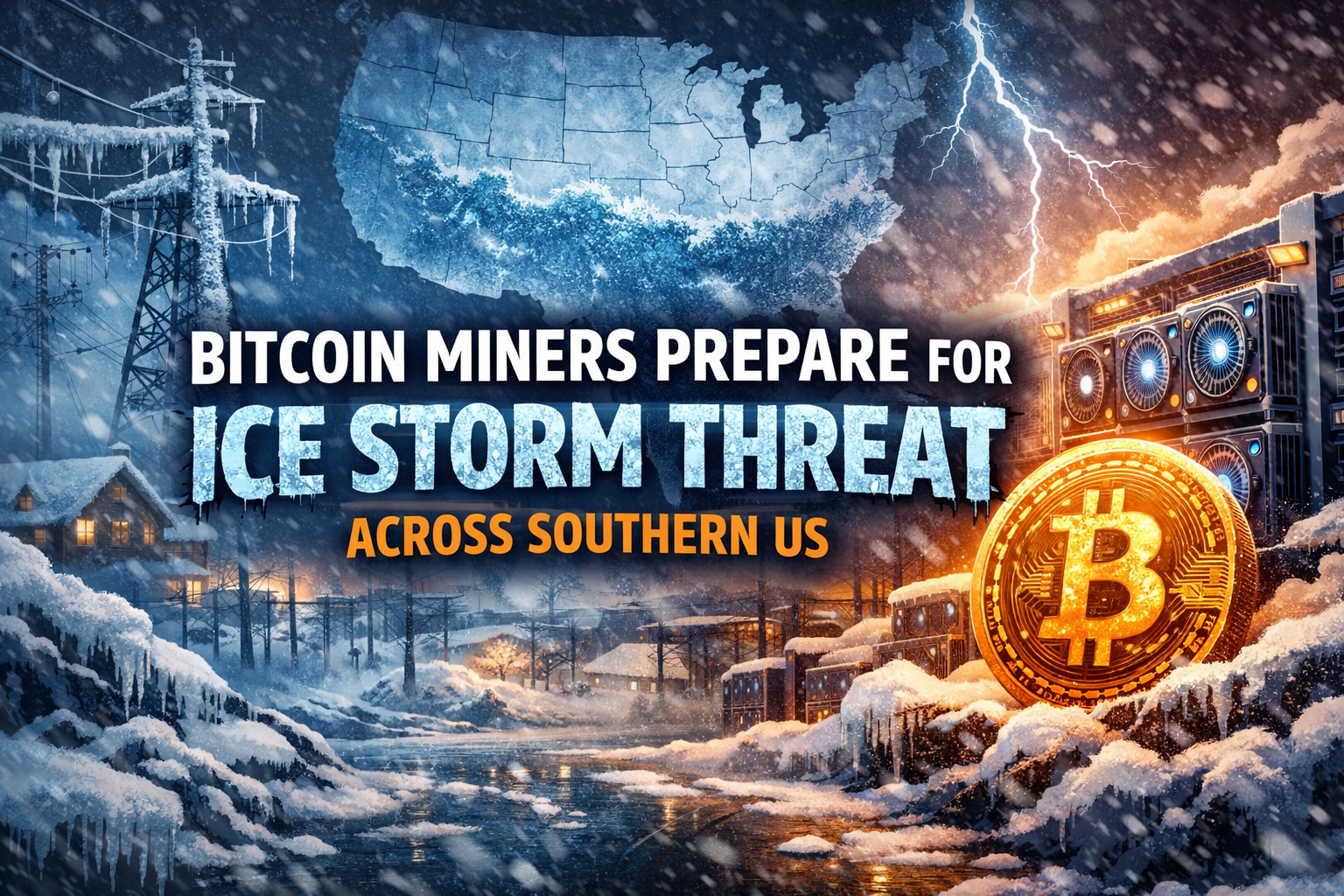
Massive Winter Storm Approaches US
A powerful winter storm is forecast to sweep across much of the southern United States, bringing heavy snow, freezing rain, and dangerous ice accumulation. Weather experts warn the system could stretch nearly 1,800 miles from far west Texas to the mid-Atlantic coast, disrupting travel, damaging infrastructure, and threatening power grids in more than a dozen states. According to AccuWeather, the storm could impact up to 60 million people, raising concerns across multiple sectors—including cryptocurrency mining.
For Bitcoin miners, extreme winter weather poses a unique challenge. While cold temperatures can improve mining efficiency, ice storms and grid instability can disrupt operations and force miners to shut down temporarily to protect infrastructure and support the grid.
Miners May Curtail Operations Again
Bitcoin miners have a history of powering down during extreme weather events to reduce strain on electricity networks. In 2022, during a severe winter storm in Texas, miners voluntarily curtailed operations to help stabilize the grid.
Experts believe miners will likely repeat this approach. Daniel Batten, a Bitcoin environmental, social, and governance researcher, said that as extreme weather events become more frequent, load balancing by miners will become increasingly important—especially as renewable energy sources like wind and solar continue to expand across power grids.
This flexibility makes Bitcoin mining uniquely suited to act as a controllable demand response mechanism. Miners can scale operations up or down within minutes, unlike many traditional industrial electricity users.
Bitcoin Mining and Grid Load Balancing
Bitcoin miners play a critical role in stabilizing modern power grids. Many facilities are located near renewable energy installations and absorb excess electricity when supply is high. When demand spikes or weather disrupts supply, miners can shut down to free capacity for households and essential services.
This ability to dynamically adjust consumption has turned mining operations into a valuable grid asset rather than just an energy consumer. A recent report from the Digital Assets Research Institute suggested that Bitcoin mining has helped Texas avoid billions of dollars in infrastructure costs by reducing the need for gas peaker plants.
Bitdeer Expects Limited Disruption
Despite the looming storm, Singapore-based mining firm Bitdeer does not expect major disruptions. The company operates more than 293,000 rigs worldwide, including large deployments in Texas and other US states.
A spokesperson for Bitdeer said storms typically do not directly impact operations due to standard winterization procedures, continuous monitoring, and responsive site teams. They added that the company is prepared to curtail electricity usage if grid supply constraints arise.
The Electric Reliability Council of Texas classifies Bitcoin miners as “large flexible loads,” meaning they can reduce consumption on request—something most industrial consumers cannot easily do.
US Dominates Global Bitcoin Hashrate
The United States controls a significant share of the global Bitcoin hashrate, making weather events in the region particularly important for the broader crypto ecosystem. Data from Hashrate Index estimates the US accounts for nearly 38% of the world’s Bitcoin mining power.
Several major publicly traded mining companies operate in the US, including Marathon Digital Holdings and Riot Platforms. These firms run large-scale facilities across Texas, Georgia, New York, and other states.
In 2024, the US Energy Information Administration reported more than 137 crypto-mining facilities nationwide, highlighting the sector’s rapid expansion and growing influence on energy markets.
Extreme Weather and Crypto Infrastructure
The upcoming ice storm underscores the growing intersection between climate events and digital infrastructure. As Bitcoin mining becomes more integrated into national energy grids, weather disruptions could have broader implications for hashrate, transaction confirmation times, and network security.
However, many experts argue that the industry’s ability to rapidly curtail and restart operations makes it more resilient than traditional energy-intensive industries. Temporary mining slowdowns during storms are unlikely to significantly impact the Bitcoin network, as global miners in other regions can compensate.
Future of Mining Amid Climate Risks
Climate volatility is expected to increase in coming years, making weather resilience a critical priority for miners. Companies are investing in weatherproof facilities, diversified geographic locations, and stronger grid partnerships to reduce risk.
The trend toward renewable-powered mining could also strengthen grid stability, as miners increasingly act as flexible demand assets rather than constant power consumers. As more countries integrate renewables, Bitcoin mining’s load-balancing role could become even more valuable.
Conclusion: Storms Test Mining Resilience
The impending ice storm across the southern United States highlights the evolving relationship between Bitcoin mining and modern energy infrastructure. While miners may temporarily power down to support grid stability, the industry’s flexibility and preparedness suggest minimal long-term disruption.
With the US controlling a major share of global hashrate, how miners respond to extreme weather will continue to shape the future narrative around crypto sustainability, energy use, and grid integration.