 qerranews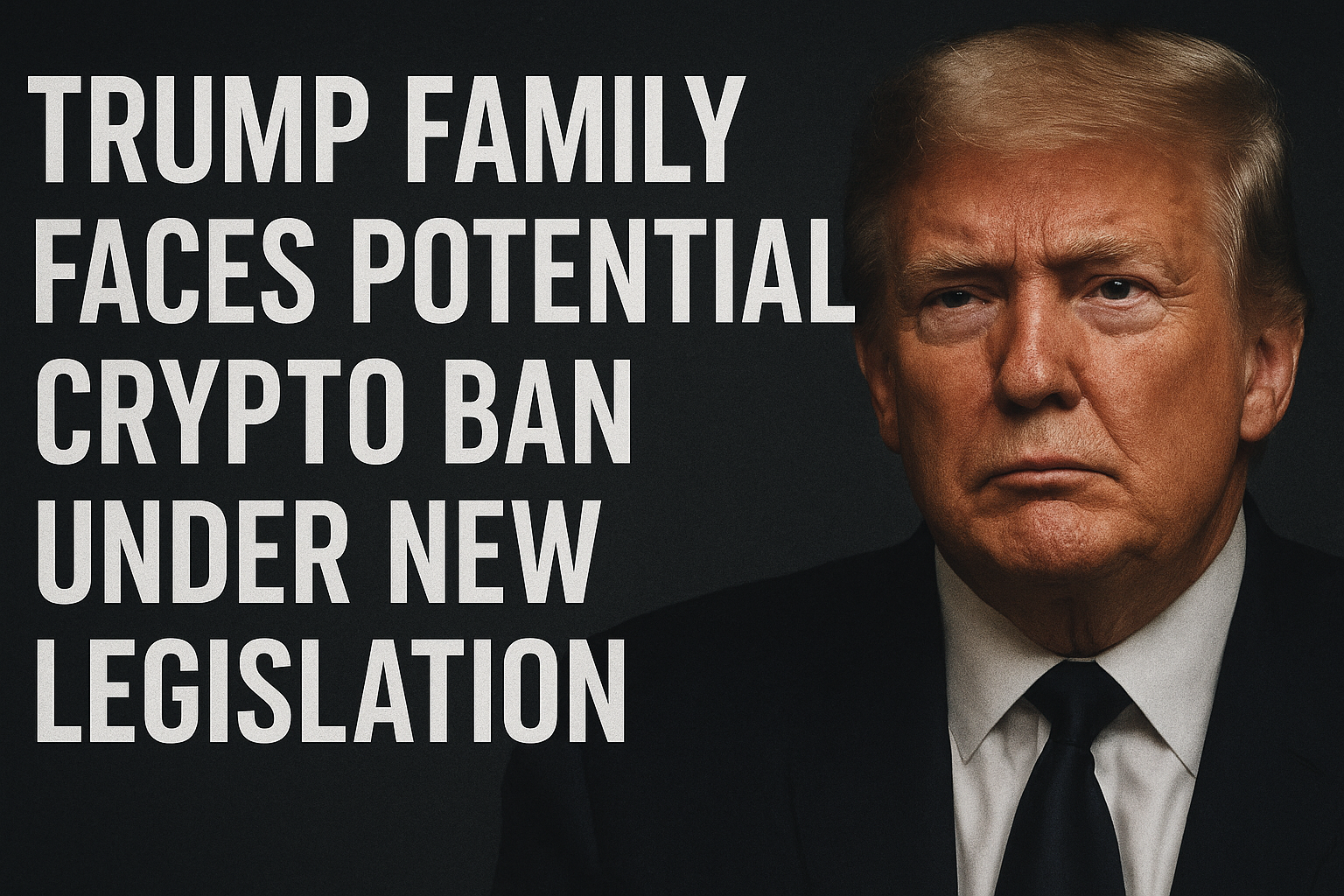
Lawmaker Targets Trump Family
US Representative Ro Khanna is preparing a bill to ban all elected officials from trading crypto or stocks, citing ongoing concerns about conflicts of interest in Washington.
The California Democrat, known for his reformist stance and as vice-chair of the Congressional Progressive Caucus, announced his plan during an interview with MSNBC, directly referencing Donald Trump’s family’s crypto connections.
Khanna expressed particular concern over Trump’s potential ties to World Liberty Financial (WLFI) — a crypto project linked to Eric Trump — and the recent presidential pardon of Binance co-founder Changpeng “CZ” Zhao.
Crypto, Pardon, and Allegations
According to Khanna, the pardon of CZ Zhao, who pleaded guilty to a single felony count of violating the US Bank Secrecy Act, represents “blatant corruption.”
“You’ve got a foreign billionaire who was basically engaged in money-laundering,” Khanna said, alleging Zhao petitioned for a pardon after “funneling money to terrorists.”
Zhao, however, has pushed back against similar accusations, notably from Senator Elizabeth Warren, claiming she “can’t get her facts right.”
CZ’s case stemmed from Binance’s alleged failure to maintain an effective Anti-Money Laundering (AML) program — but the timing of his pardon has sparked deeper scrutiny of the Trump administration’s ties to crypto.
Khanna further alleged that Zhao’s financial support for WLFI, a project linked to the Trump family, may have influenced the pardon.
“And what he does is he says, ‘I’m going to support World Liberty,’ which is the president’s son’s cryptocurrency firm… and Donald Trump gives him a pardon while he is basically financing Donald Trump’s cryptocurrency stablecoin,” Khanna said.
WLFI Ties Under Scrutiny
World Liberty Financial (WLFI) has become a lightning rod for political controversy since its launch earlier this year.
While the Trump family’s involvement remains disputed, critics argue that the token’s success is tied to political proximity rather than innovation.
Eric Trump, who spearheads WLFI’s operations, has repeatedly denied his father’s involvement, insisting that Donald Trump “has no business connection” with the project.
In a September interview, Eric stated, “He’s running a nation. He’s not involved in our businesses in any way, shape or form.”
Still, the overlap between crypto politics and presidential influence continues to fuel debate — especially as Trump’s administration shows increasing openness toward blockchain-related ventures and digital finance.
Khanna’s Bill in Focus
While Khanna did not provide detailed legislative text, he made his intentions clear:
“I’m calling for a ban on any elected official from having cryptocurrency and accepting foreign money,” he said.
If introduced, the bill could represent one of the strictest financial ethics reforms targeting digital assets within government.
According to congressional records, Khanna’s proposal has not yet been formally introduced, but early reactions from Capitol Hill suggest growing support among progressive members.
The measure aligns with the ongoing bipartisan congressional stock trading bill, which seeks to limit lawmakers’ personal investments to prevent insider advantages.
Double Standards Questioned
While Khanna’s push has gained traction among ethics advocates, critics point out potential hypocrisy in his own financial dealings.
According to data from Quiver Quant, Khanna himself has executed over $80.3 million in stock trades in 2025 alone, with total trade volume since 2017 surpassing $580 million.
His top traded sectors include financials, information technology, and healthcare — areas often influenced by congressional policy decisions.
This revelation has led some analysts to question whether Khanna’s new bill is an act of genuine reform or a political maneuver targeting Trump amid rising tensions over crypto regulation.
Crypto Politics Heating Up
The proposed Trump crypto trading ban highlights how digital assets are increasingly shaping U.S. politics.
Trump’s support for blockchain innovation — coupled with WLFI’s rising visibility — has made crypto a key election-year issue.
Khanna’s remarks echo a broader trend: the growing belief that public officials’ crypto exposure could blur ethical boundaries and compromise policymaking.
Whether his bill becomes law or not, the debate underscores how crypto regulation, transparency, and political accountability are now firmly intertwined in America’s evolving digital economy.
Conclusion:
Ro Khanna’s push to ban Trump and other elected officials from trading crypto may signal a new era of crypto ethics oversight.
However, with his own trading record under scrutiny, the move could also deepen the political divide over financial transparency — just as crypto becomes an election-year battleground.