 qerranews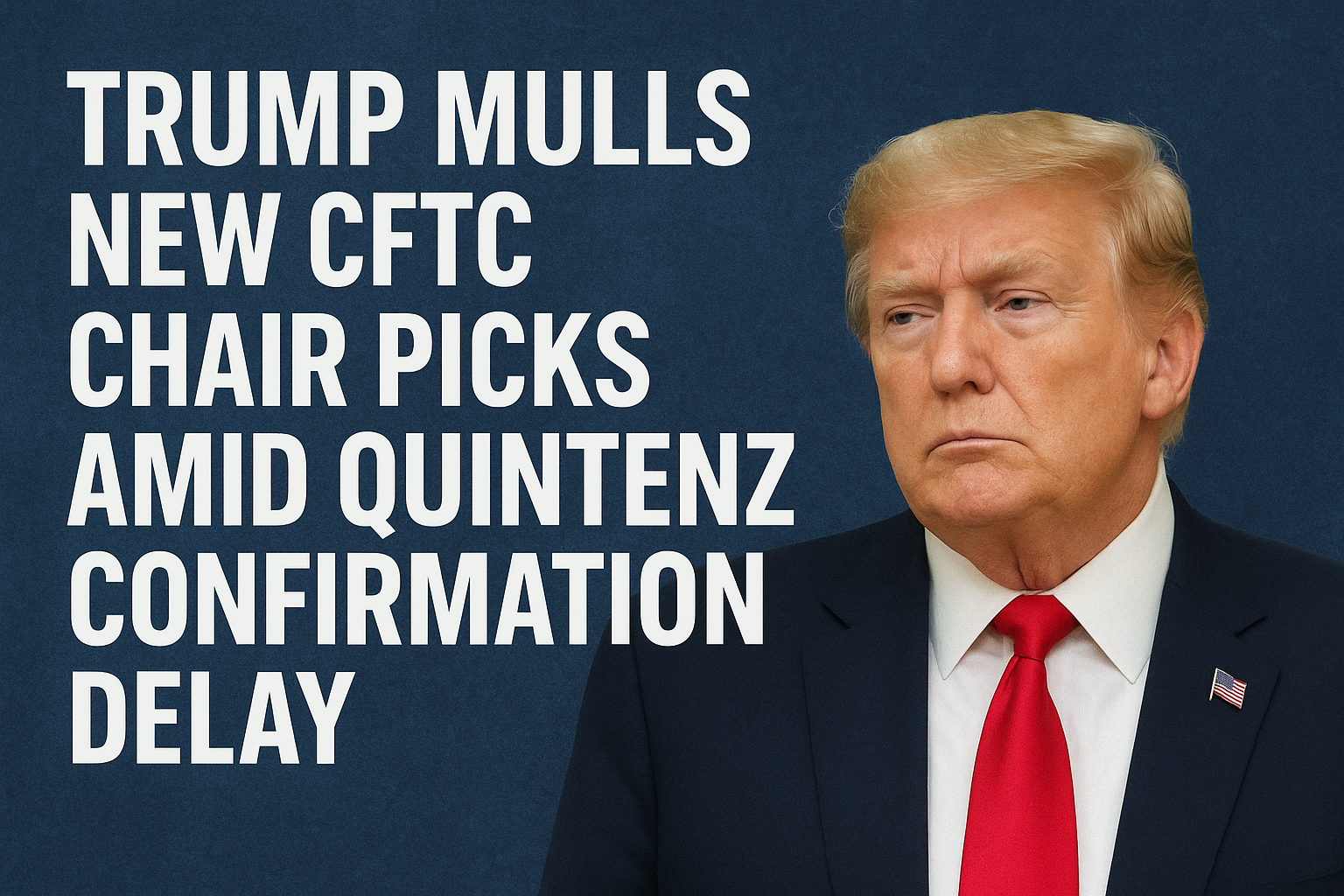
Introduction: CFTC Leadership Uncertainty
The U.S. Commodity Futures Trading Commission (CFTC) is facing a leadership vacuum as President Donald Trump reconsiders his nominee for chairmanship. Brian Quintenz, a former commissioner long favored by many within the financial community, saw his confirmation process stall after mounting opposition from high-profile crypto players, particularly the Winklevoss twins of Gemini exchange.
This development has shifted the spotlight onto alternative candidates, raising questions about the direction of U.S. crypto regulation. With the CFTC set to gain expanded oversight over digital assets, the choice of its next leader is critical.
The current situation highlights how politics, finance, and crypto influence are increasingly intertwined in Washington, D.C.
Winklevoss Twins Flex Influence
Brian Quintenz’s nomination faced a major obstacle when Gemini co-founders, Tyler and Cameron Winklevoss, reportedly asked Trump to halt the process. Their intervention stemmed from frustrations over years of regulatory enforcement actions targeting Gemini under previous administrations.
“Seven years of lawfare trophy hunting. It’s outrageous what they did to us,” Tyler Winklevoss stated, reflecting the brothers’ discontent with what they see as overreach.
The Winklevoss twins’ influence is far from trivial. After contributing millions to Trump’s campaign, their sway in Washington has grown significantly. The Wall Street Journal described their intervention as “flexing their Washington influence,” signaling a new era where crypto billionaires are actively shaping regulatory leadership decisions.
For Quintenz, the delay is particularly frustrating. Earlier this month, he suggested Trump “might have been misled” by the Winklevoss twins, even posting private exchanges on X to defend his track record.
This confrontation illustrates the broader clash between regulators and crypto entrepreneurs who seek friendlier frameworks for digital asset innovation in the U.S.
Exploring New Leadership Options
With Quintenz’s nomination stalling, the Trump administration has begun weighing alternative candidates for the CFTC chair. Two names have surfaced in Washington circles:
- Michael Selig – Chief counsel to the Securities and Exchange Commission’s crypto task force and a seasoned asset management attorney. His background in crypto regulation gives him credibility as a balanced figure who understands both enforcement and innovation.
- Tyler Williams – A Treasury counselor on digital asset policy who previously worked at Galaxy Digital, the crypto investment firm founded by Mike Novogratz. His mix of government and private sector crypto experience makes him a strong candidate for advancing pragmatic regulation.
Both candidates represent a pivot toward leaders with direct crypto expertise, signaling that the White House is aware of the sector’s growing economic and political importance.
While the White House has not formally withdrawn Quintenz’s nomination, sources confirm that discussions over new names have intensified. Until a final decision is made, Caroline Pham, the current acting chair, remains the sole commissioner holding the agency together after several resignations.
Crypto Policy Direction Matters
The choice of the next CFTC chair is not just a bureaucratic appointment—it has far-reaching consequences for crypto markets in the U.S.
The CFTC has historically been seen as friendlier to digital assets compared to the Securities and Exchange Commission (SEC). Recent initiatives reflect this:
- Crypto Sprint Program – The Commission allowed offshore exchanges to serve U.S. citizens under a controlled framework.
- Spot Crypto Asset Contracts – In August, the CFTC began enabling trading of spot crypto asset contracts on registered futures exchanges.
Such moves are designed to bring innovation under regulatory oversight rather than push it offshore. If a pro-crypto leader takes charge, these policies could accelerate, making the U.S. a more favorable environment for blockchain startups, investors, and institutional players.
On the other hand, if the appointment tilts toward stricter enforcement, the U.S. risks losing ground to jurisdictions like the EU, Singapore, and Hong Kong, which are actively pursuing crypto-friendly regulations.
Thus, the next chair’s stance could shape the competitive landscape of global crypto adoption.
Politics Meets Crypto Regulation
The Quintenz saga underscores a broader reality: crypto is no longer on the policy sidelines. Industry giants, backed by significant campaign contributions, are directly influencing regulatory appointments.
The Winklevoss twins’ successful push to delay Quintenz’s confirmation shows how political donations and lobbying can shift Washington’s decision-making. Their focus is not just on Gemini’s survival but also on ensuring the next CFTC leader fosters an environment where digital assets can flourish.
Meanwhile, Trump’s administration faces pressure to balance competing priorities:
- Appeasing major crypto donors who expect regulatory relief.
- Ensuring institutional confidence in the U.S. financial system.
- Positioning the U.S. globally as a leader in financial innovation.
At a time when crypto legislation is moving through Congress to expand the CFTC’s jurisdiction, the leadership decision becomes even more critical.
Potential Impacts on U.S. Crypto Market
Should Michael Selig or Tyler Williams secure the chairmanship, the U.S. crypto industry may see:
- Clearer regulatory frameworks for exchanges and token issuers.
- Increased institutional participation through futures and spot markets.
- Friendlier dialogue between industry and regulators, reducing costly enforcement actions.
- Expansion of pro-crypto initiatives like the crypto sprint program.
However, if the leadership vacuum continues, the CFTC’s ability to act decisively may be compromised, delaying much-needed regulatory clarity. This uncertainty could push more companies to operate abroad, undermining U.S. competitiveness in the global digital economy.
Conclusion: Stakes for Crypto Future
The stalled confirmation of Brian Quintenz as CFTC chair highlights the growing intersection of politics, finance, and crypto influence in Washington. With the Winklevoss twins actively reshaping the debate and new candidates like Michael Selig and Tyler Williams entering the mix, the decision carries enormous implications.
The next CFTC leader will determine how the U.S. navigates the balance between protecting investors and fostering innovation. A pro-crypto appointment could accelerate the industry’s growth and keep the U.S. at the forefront of digital asset development. Conversely, hesitation or enforcement-heavy leadership risks pushing the sector offshore.
In short, the Trump administration’s choice of CFTC chair will shape not only the future of U.S. crypto regulation but also the global standing of America in the digital economy.