 qerranews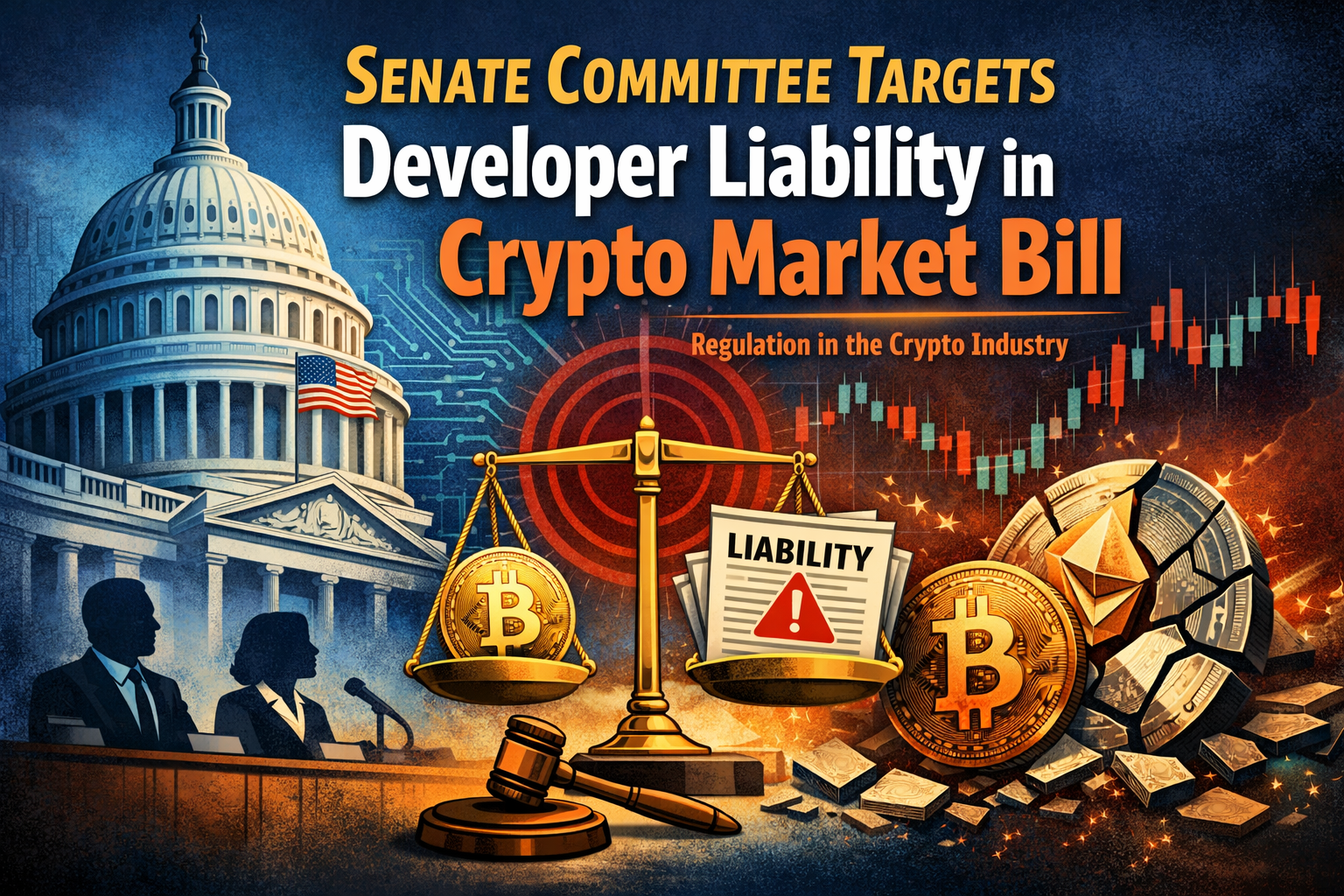
Lawmakers Raise New Concerns
A US Senate committee has intensified scrutiny of developer protections included in a major crypto market structure bill, signaling potential changes that could reshape how blockchain builders operate in the United States. The panel’s focus on developer liability highlights growing unease among lawmakers over whether existing safeguards go too far in shielding software creators from legal responsibility.
The debate centers on provisions designed to protect open-source developers from being treated as financial intermediaries. While supporters argue these safeguards are essential for innovation, critics within the Senate say the language may unintentionally create loopholes that bad actors could exploit.
Developer Safeguards Explained
At the heart of the dispute are “safe harbor” clauses that limit liability for developers who write or maintain blockchain code without directly controlling user funds. These provisions aim to distinguish decentralized software creators from centralized exchanges, brokers, or custodians.
Crypto advocates argue that without such protections, developers could face enforcement actions simply for publishing code. This, they warn, could push innovation offshore and discourage participation in open-source blockchain projects that underpin decentralized finance (DeFi), non-fungible tokens (NFTs), and on-chain infrastructure.
However, members of the Senate committee questioned whether the current wording sufficiently accounts for cases where developers retain influence over protocols after launch.
Liability Versus Innovation
Several senators expressed concern that overly broad protections could make it difficult for regulators to hold accountable those who actively profit from or control crypto platforms while claiming to be “just developers.”
The committee emphasized that consumer protection remains a top priority, particularly after a series of high-profile collapses and hacks that wiped out billions in user funds. Lawmakers suggested that developers who maintain upgrade keys, governance control, or revenue streams may need to face clearer obligations under US law.
This tension reflects a broader policy challenge: how to encourage technological innovation without weakening enforcement against fraud, market manipulation, or systemic risk.
Impact On Crypto Builders
If developer safeguards are narrowed or removed, the implications for US-based crypto builders could be significant. Legal uncertainty may increase for teams working on decentralized protocols, especially in areas such as DeFi lending, perpetual trading, and on-chain derivatives.
Some industry leaders warn that ambiguous liability standards could deter venture capital investment and accelerate the migration of crypto startups to more permissive jurisdictions. Others argue that clearer rules would actually benefit the market by drawing a firm line between passive code authors and active operators.
For independent developers, the outcome could determine whether contributing to open-source blockchain projects carries legal risk.
Industry Pushback Grows
Crypto trade groups and advocacy organizations have begun pushing back against the committee’s stance, warning that weakening developer protections could undermine the very decentralization policymakers claim to support.
They argue that treating software developers as financial actors misunderstands how blockchain networks function. In many cases, code is deployed autonomously, with no ongoing control by its original creators.
Industry representatives have urged lawmakers to refine, rather than eliminate, safe harbor language to ensure it targets genuine misconduct without penalizing innovation.
Regulatory Direction Shifts
The Senate committee’s comments suggest a possible shift toward stricter oversight as lawmakers attempt to finalize a comprehensive crypto framework. The market structure bill is intended to clarify regulatory authority between agencies and provide long-awaited legal certainty for digital assets.
By reopening the question of developer liability, senators are signaling that the bill’s final form may differ substantially from earlier drafts backed by the crypto industry.
This renewed focus also reflects broader political pressure to demonstrate toughness on crypto regulation ahead of future legislative sessions.
What Comes Next
The crypto market bill is still subject to revisions, amendments, and negotiations between both chambers of Congress. Any changes to developer safeguards will likely face intense debate, with competing interests from regulators, consumer advocates, and the crypto sector itself.
For now, developers and investors alike are watching closely, aware that the final language could set a precedent not only for crypto but for how US law treats open-source software more broadly.
As the Senate committee continues its review, the outcome may determine whether the US positions itself as a hub for blockchain innovation or adopts a more cautious regulatory stance that reshapes the industry’s future.