 qerranews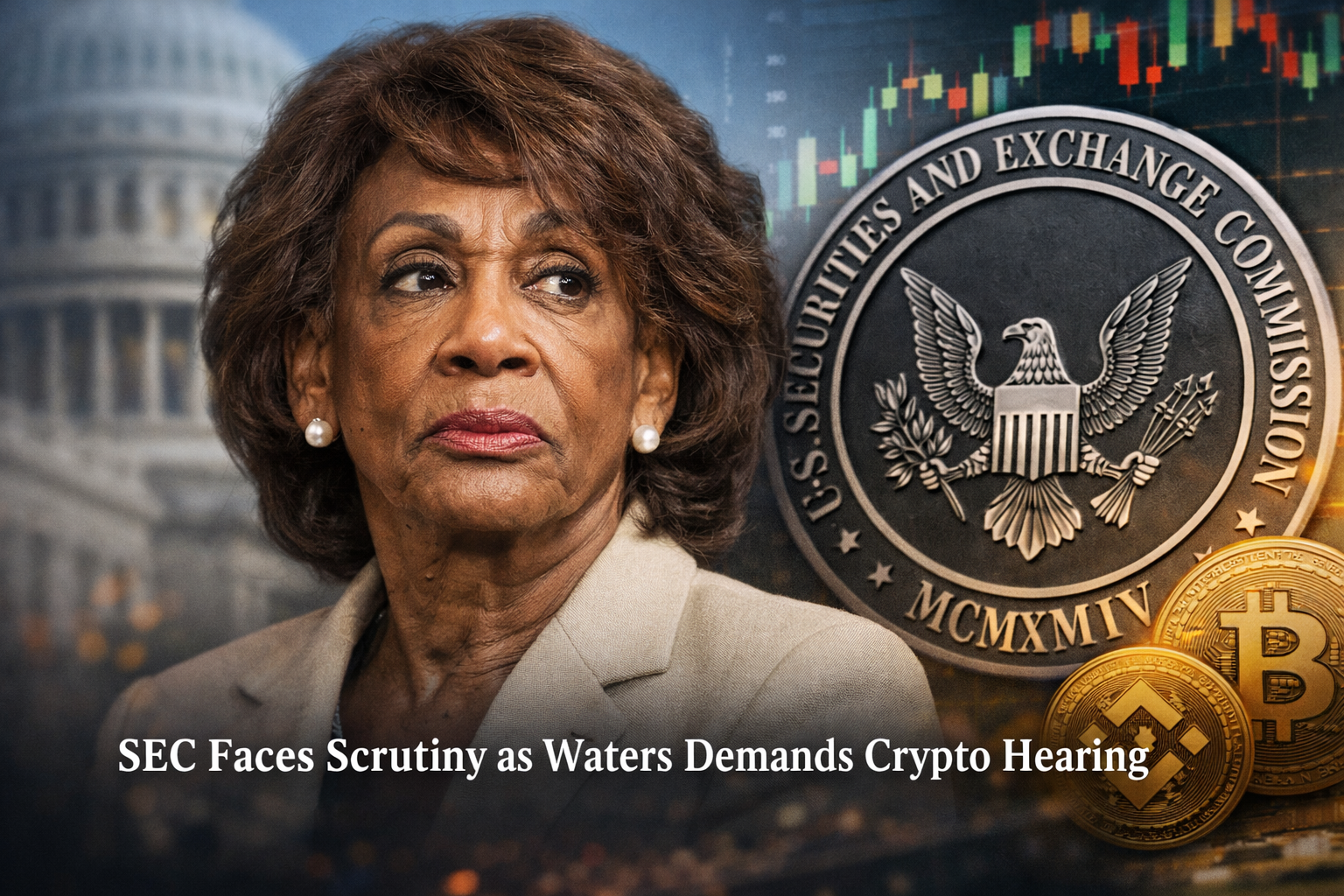
US Representative Maxine Waters has called for a congressional oversight hearing to examine the Securities and Exchange Commission’s evolving approach to cryptocurrency regulation. The demand comes after the SEC dropped or paused several high-profile enforcement actions against major crypto firms, including Coinbase, Binance, and individuals such as Tron founder Justin Sun.
In a letter sent Sunday to House Financial Services Committee Chair French Hill, Waters argued that the lack of oversight hearings under current SEC leadership raises serious concerns about transparency, accountability, and the politicization of financial regulation.
Waters Calls Hearing
Waters, the ranking Democrat on the House Financial Services Committee, urged lawmakers to summon SEC Chair Paul Atkins for a formal hearing. She highlighted what she described as “rapid, significant, and questionable policy changes” at the agency since the leadership transition earlier this year.
According to Waters, congressional oversight of the SEC has been insufficient, especially given the scale of changes affecting crypto markets. She pointed out that former SEC Chair Gary Gensler testified twice before the committee during his first year, while Atkins has yet to appear for a single hearing.
“Despite having a clear obligation to oversee the SEC, the Committee has not held a single hearing with Chairman Atkins,” Waters wrote, emphasizing the urgency of congressional review.
Dropped Crypto Cases
A central concern in Waters’ letter is the SEC’s decision to terminate or stay multiple crypto enforcement actions that had previously alleged serious securities law violations. Among the cases cited were lawsuits and investigations involving Coinbase, Binance, and Justin Sun.
Waters claimed these cases were dismissed despite credible accusations and extensive prior investigations. She also raised alarms over procedural irregularities, stating that in some instances, defendants publicly announced that cases were dropped before the SEC had formally voted on the matter.
Such actions, she argued, undermine the integrity of the regulatory process and erode public confidence in the SEC’s enforcement role.
Independence Under Question
Beyond enforcement decisions, Waters warned that the SEC’s independence may be at risk. She accused the agency of becoming increasingly politicized, particularly under the Trump administration, which nominated Atkins to lead the regulator.
Waters outlined ten areas that she believes must be addressed in an oversight hearing, including the weakening of market surveillance, shifts in enforcement priorities, and changes to internal decision-making processes.
For critics, the concern is not merely about being pro- or anti-crypto, but whether regulatory decisions are being made consistently, transparently, and free from political pressure.
Atkins’ Crypto Shift
Paul Atkins officially took over as SEC chair in April, replacing longtime crypto skeptic Gary Gensler. Since then, the agency has adopted a noticeably friendlier stance toward the crypto industry.
Under Atkins’ leadership, the SEC has shelved several lawsuits, eased restrictions on crypto exchange-traded funds, and expressed support for clearer regulatory frameworks through initiatives such as Project Crypto. Industry participants have welcomed these changes, viewing them as a move toward regulatory clarity rather than enforcement-driven oversight.
However, critics like Waters argue that this shift risks weakening investor protections and emboldening bad actors in an industry still plagued by fraud, hacks, and collapses.
Crypto Fraud Concerns
Waters has long positioned herself as a vocal critic of the cryptocurrency industry. She has repeatedly warned that lax regulation could expose retail investors to significant risks.
In October, Waters condemned the pardon of Binance co-founder Changpeng Zhao, calling it a troubling signal about accountability in the crypto sector. Earlier this year, she also published an opinion piece opposing major legislative proposals such as the CLARITY Act and the GENIUS Act.
According to Waters, these frameworks could “open the floodgates to massive fraud and financial ruin” by weakening the SEC’s authority and shifting oversight to agencies she views as less equipped to police crypto markets.
Political Divide Grows
The dispute over SEC oversight highlights a growing partisan divide over crypto regulation in the United States. Republicans have generally pushed for lighter-touch regulation and clearer rules to encourage innovation, while Democrats like Waters emphasize enforcement, investor protection, and systemic risk.
With billions of dollars flowing through crypto markets and growing institutional adoption, the outcome of this debate could shape US digital asset policy for years to come.
If a hearing is scheduled, it would mark the first time Chair Atkins publicly addresses lawmakers’ concerns about the SEC’s crypto strategy — a moment likely to draw close attention from investors, exchanges, and policymakers alike.