 qerranews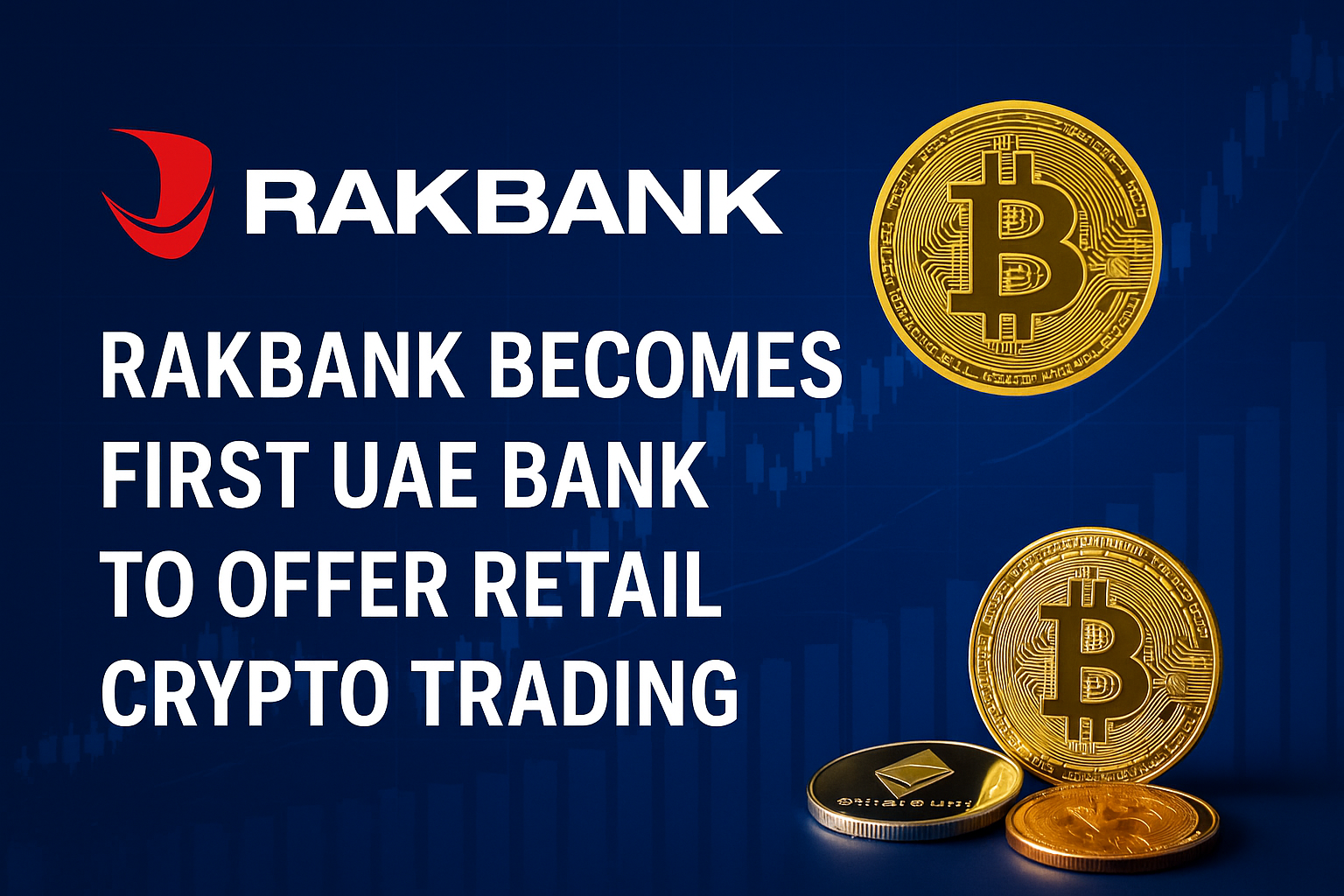
Rakbank Enables Retail Crypto Trading
In a major step toward mainstream crypto adoption in the Middle East, the National Bank of Ras Al Khaimah, commonly known as Rakbank, has become the first traditional bank in the United Arab Emirates (UAE) to offer crypto trading for retail customers. This milestone service is powered by Austria-based Bitpanda and is currently available through the Rakbank mobile banking app.
The bank’s announcement marks a pivotal shift in how cryptocurrencies are accessed and regulated in the UAE, providing a secure, regulated, and fully dirham-based (AED) trading solution for everyday users.
Raheel Ahmed, Group CEO of Rakbank, emphasized the importance of accessibility and regulation in crypto trading. “We believe customers in the UAE deserve a more efficient and seamless crypto buying, selling, and swapping journey that is fully regulated and entirely in AED,” he said in the bank’s announcement.
Partnership With Bitpanda Explained
Rakbank’s offering is built on infrastructure developed by Bitpanda, a licensed digital assets platform headquartered in Austria. Transactions will be executed and custodied through Bitpanda Broker MENA DMCC, a Dubai-based entity regulated by the Virtual Assets Regulatory Authority (VARA).
This partnership leverages Bitpanda’s existing expertise and compliance framework, which already serves notable European institutions like Deutsche Bank, Raiffeisen Bank, and N26. According to Lukas Enzersdorfer-Konrad, Deputy CEO of Bitpanda, “This is a big moment for digital assets in the region.”
The service is designed to eliminate common friction points in crypto trading by removing the need for international wire transfers, third-party exchanges, or foreign currency conversions. Rakbank customers can now trade crypto directly in dirhams without incurring any foreign exchange fees or delays.
UAE’s Push Toward Digital Finance
Rakbank’s move aligns with the UAE’s broader vision of becoming a global crypto and blockchain hub. Over the past few years, the country has aggressively positioned itself as a destination for Web3, blockchain, and digital asset innovation.
The Dubai Multi Commodities Centre (DMCC) has attracted over 600 crypto-related firms, while the Dubai International Financial Centre (DIFC) continues to welcome fintech players. Government entities and financial regulators, such as VARA and the Dubai Financial Services Authority (DFSA), have laid out comprehensive crypto frameworks to support growth.
Just last month, DFSA approved Ripple’s RLUSD stablecoin, marking another step in the UAE’s ambition to support blockchain-based financial products. With Rakbank entering the arena, traditional financial institutions are beginning to play a more central role in the ecosystem.
Rakbank’s integration with Bitpanda represents a significant vote of confidence in the digital asset market. It also sets a new standard for banks in the region to follow.
Exclusive Launch and Wider Rollout
While Rakbank’s crypto trading feature is currently available by invitation only, the bank has confirmed that a wider rollout is expected in the coming months. Interested customers can expect to gain access to a selection of top cryptocurrencies directly via the Rakbank mobile app.
The feature allows users to buy, sell, and swap digital assets such as Bitcoin, Ethereum, and potentially stablecoins — all within the regulatory guardrails set by VARA. This seamless integration offers a key advantage for retail customers, especially those who previously relied on offshore or unregulated exchanges.
For users in the UAE, this also marks a step toward institutional-grade custody and security for crypto assets, which remains a concern for many in the retail space.
What This Means for the Region
Rakbank’s crypto integration could have a ripple effect across the regional financial ecosystem. Other banks may be encouraged — or even feel pressured — to follow suit as customer demand grows and regulatory clarity improves.
The collaboration underscores a growing trend of traditional financial institutions partnering with fintechs to bridge the gap between legacy systems and emerging technologies. The fact that Bitpanda is regulated in multiple European jurisdictions gives further weight to the trustworthiness and compliance of the offering.
Moreover, the use of local currency (AED) in crypto trading brings an unprecedented level of convenience and transparency for UAE residents, removing the usual complexity of converting to USD or EUR.
Conclusion: A New Era for Crypto Access
The Rakbank-Bitpanda partnership signals a turning point for retail crypto adoption in the UAE. By integrating crypto directly into a mobile banking app — and doing so under full regulatory oversight — Rakbank is setting a bold example for how digital finance can coexist with traditional banking.
It’s a move that aligns with both the UAE’s economic vision and global trends toward crypto adoption. As more users gain access to regulated platforms, and as banks explore partnerships with established crypto firms, the region could become a blueprint for safe and widespread digital asset adoption.
With more updates expected in the coming months, all eyes will be on Rakbank’s rollout and how it influences the broader banking and fintech sectors in the Gulf region.