 qerranews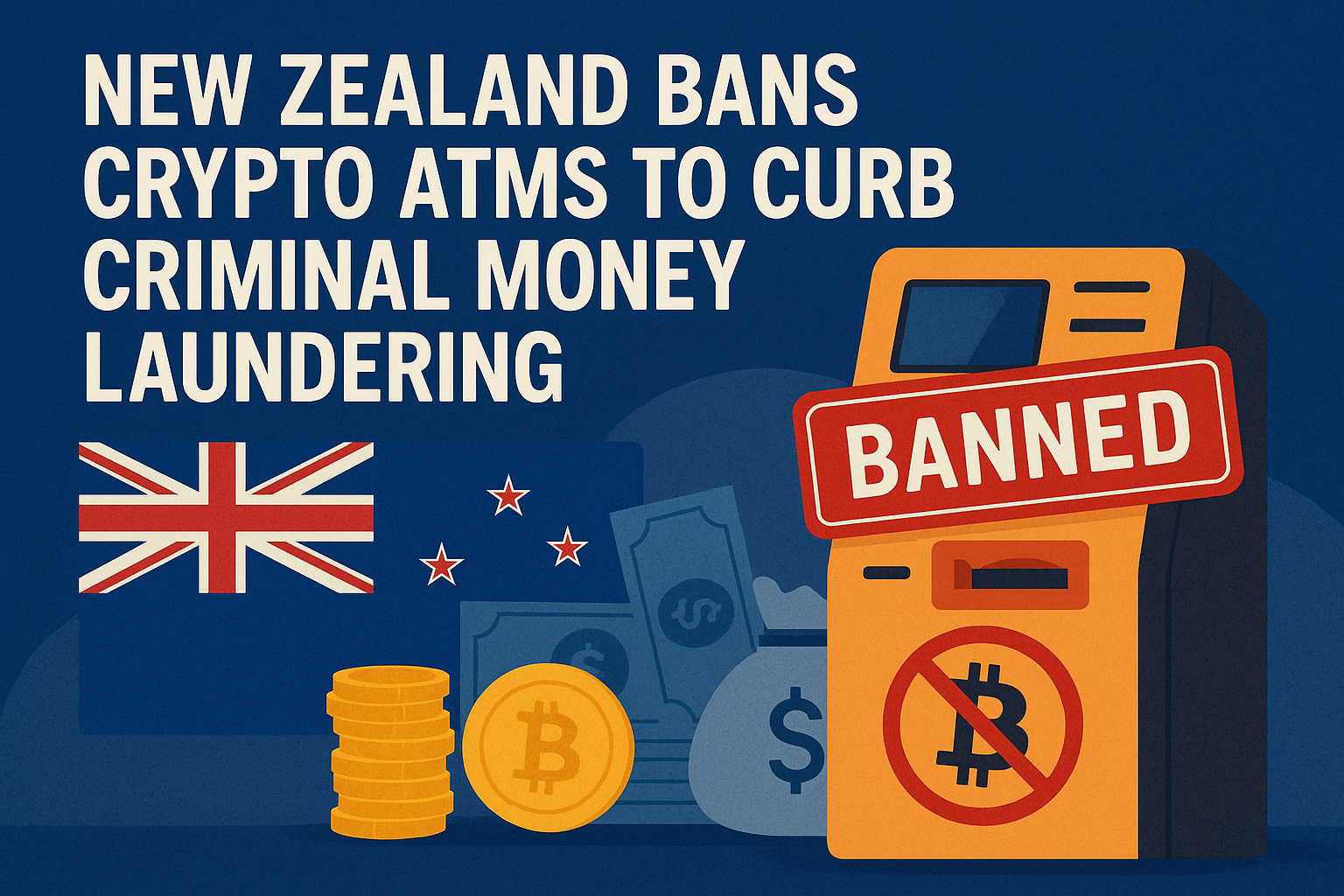
Crypto ATMs Banned Nationwide
In a sweeping move aimed at bolstering financial integrity and combating crime, New Zealand has officially banned all cryptocurrency ATMs across the country. The decision comes as part of a broader anti-money laundering and counter-terrorism financing reform package announced by Associate Justice Minister Nicole McKee.
The measures include a full prohibition of crypto kiosks and a $5,000 limit on international cash transfers. These steps, according to government officials, are intended to close loopholes commonly exploited by criminal organizations to move illicit funds quickly and anonymously.
“We will also make it more difficult for criminals to convert cash to high-risk assets such as cryptocurrencies by banning crypto ATMs,” said McKee during a press conference.
The announcement reflects growing concerns over how cryptocurrencies and related infrastructure like crypto ATMs have enabled illicit financial flows, particularly in drug trafficking and fraud schemes. Officials say the move is aimed at safeguarding New Zealand’s financial system from being misused by bad actors.
Overseas Transfers Face Limitations
Beyond crypto ATMs, the reform package also includes a cap on overseas cash transfers, limiting transactions to a maximum of $5,000. This policy is intended to further stifle the ability of criminals to funnel illicit proceeds out of the country undetected.
New Zealand authorities say this move is based on growing intelligence from law enforcement and financial oversight bodies, which highlight the frequent use of international remittances as a method for money laundering. These transfers often serve as the final step in schemes that begin with converting physical cash into digital assets.
The Financial Intelligence Unit (FIU), New Zealand’s key watchdog agency, will now receive enhanced powers. This includes the authority to request ongoing transaction and client information from banks and other regulated entities about individuals suspected of illegal financial activities.
These steps align with the global push to adopt a more surveillance-focused, data-driven approach to financial crime prevention, particularly when it comes to high-risk sectors like digital assets and foreign remittances.
AML Laws Undergo Major Reform
The crypto ATM ban and overseas transfer cap are just the tip of the iceberg. New Zealand is pushing forward with two new Anti-Money Laundering and Countering Financing of Terrorism (AML/CFT) reform bills currently in parliament. These bills are expected to pass before the end of 2025.
According to McKee, the reforms will balance strong enforcement with practical relief for legitimate businesses.
“We’re removing some of the most burdensome compliance requirements, delivering practical relief for businesses by the end of the year,” she stated.
But that doesn’t mean a drop in standards. Instead, the government wants smarter regulation—targeting bad actors while simplifying the compliance process for good-faith businesses. “This is not about dropping standards, it’s about applying them intelligently,” McKee emphasized.
These reforms signal a more focused, risk-based approach to AML/CFT oversight, where authorities prioritize enforcement where it matters most—on activities and assets that pose the greatest threat to national and international financial integrity.
New Zealand bans crypto ATMs and limits overseas transfers to curb financial crime, following global trends targeting crypto misuse.
Global Crackdown Intensifies Further
New Zealand is not alone in its crackdown on crypto ATMs. Similar concerns have led to action in countries like Australia and the United States. Australia’s AUSTRAC recently introduced tighter restrictions on crypto ATM operators, including a cap of AUD 5,000 (approximately USD 3,250) per transaction, as well as enhanced KYC (Know Your Customer) obligations and stricter fraud monitoring.
In the U.S., the city of Spokane, Washington, has taken the bold step of outright banning all crypto ATMs. Spokane’s city council cited increasing scams and frauds, particularly those targeting the elderly and residents in low-income communities, as justification for the move.
Globally, financial regulators are increasingly viewing crypto ATMs as high-risk infrastructure. Unlike centralized crypto exchanges, these kiosks often lack sufficient compliance controls, making them ideal tools for quickly turning cash into crypto with minimal oversight.
According to Coin ATM Radar, New Zealand previously had more than 220 crypto ATMs spread across the country. Many of these kiosks were located in convenience stores and shopping malls, offering easy access to cryptocurrency for everyday users—but also for illicit actors.
An April 2025 report from the Ministerial Advisory Group on Transnational, Serious and Organised Crime highlighted that crypto ATMs had become a preferred method for criminals to convert illicit cash into untraceable digital assets, particularly for drug trafficking and online fraud.
By banning these kiosks, New Zealand aims to eliminate a major on-ramp for criminal finance while maintaining its commitment to a secure and transparent financial system.
Conclusion: A Strategic, Global Shift
New Zealand’s ban on cryptocurrency ATMs and limitations on cash transfers is part of a larger, global reckoning with the risks posed by digital financial tools. The move sends a clear message: financial innovation cannot come at the cost of public safety and institutional integrity.
While the crypto community may voice concerns about overregulation, policymakers argue that these steps are crucial for ensuring that crypto doesn’t become a sanctuary for criminal enterprise. By strengthening surveillance, modernizing legislation, and eliminating high-risk infrastructure like crypto ATMs, New Zealand is placing itself at the forefront of responsible crypto governance.
With other nations following suit, it’s clear that the era of loosely regulated crypto kiosks is coming to an end—and that the focus now is on smart, targeted enforcement that protects both consumers and financial ecosystems.