 qerranews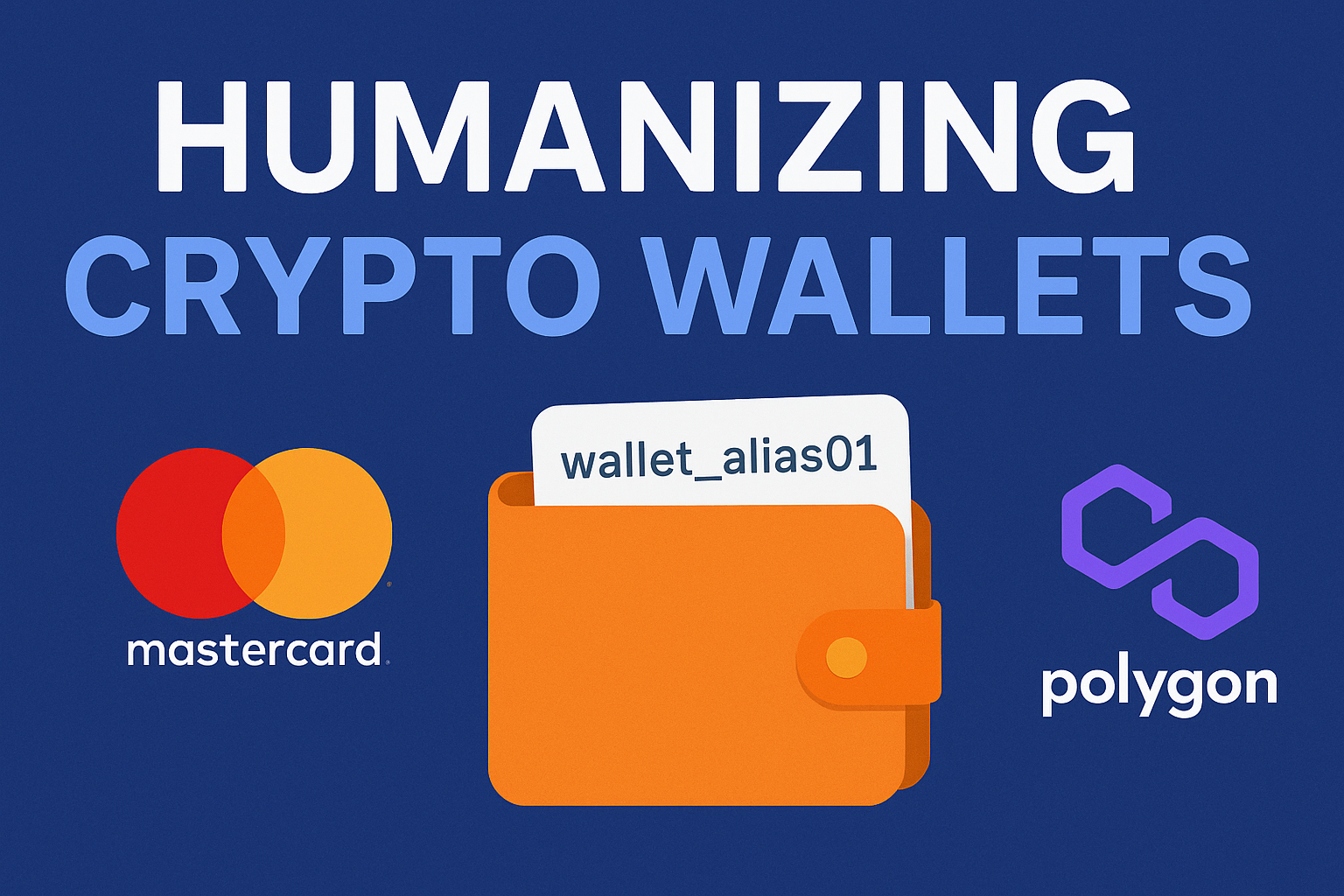
Mastercard Pushes Toward Simpler, Safer Crypto Transfers
For years, one of the largest barriers to mainstream crypto adoption has been the clunky user experience. Long, complex wallet addresses—full of random hexadecimal characters—are easy to mistype and nearly impossible to memorize. A single wrong digit can mean permanently lost funds. While crypto-native users have learned to navigate this, everyday consumers still find it confusing and risky.
Mastercard is stepping directly into this user experience gap.
The payments giant is expanding its Crypto Credential program to support self-custody wallets. The goal is simple but powerful: replace long crypto wallet addresses with verified, human-readable aliases. Think usernames instead of 42-character strings. Behind the scenes, Polygon powers the onchain layer, while Mercuryo handles identity verification.
This move is more than a UX upgrade—it signals how traditional payment leaders plan to shape the next generation of blockchain usability.
Human-Readable Aliases for Self-Custody
The newly expanded Mastercard Crypto Credential system allows self-custody users to link their wallet to an alias—like a username or handle—that represents their verified identity. These aliases eliminate the need to share or copy long addresses when sending or receiving crypto.
Polygon will be the first network to support the deployment. Mercuryo acts as the verification issuer, ensuring every alias is tied to a real, authenticated user.
Users have two options:
- Link a human-readable alias directly to their self-custody wallet
- Request a soulbound token on Polygon, a non-transferable proof that the wallet belongs to a verified individual
Soulbound tokens (SBTs) offer a powerful layer of identity: they can’t be moved, sold, or stolen—meaning they serve as a durable confirmation of wallet ownership across Web3 applications.
Mastercard says this system is built to mirror traditional financial rails. Instead of complex addresses, users interact with a simple, validated identity, creating a familiar payments experience without sacrificing the control that comes with self-custody.
Why This Matters: Reducing Errors & Building Trust
Crypto transactions aren’t reversible. Once funds are sent to the wrong address, they are effectively gone. Mastercard aims to eliminate these common user errors by turning crypto transfers into a more intuitive process.
Raj Dhamodharan, Mastercard’s executive vice president of blockchain and digital assets, captured the vision perfectly:
“By streamlining wallet addresses and adding meaningful verification, Mastercard Crypto Credential is building trust in digital token transfers.”
The initiative reduces friction at two levels:
- Ease of use: Users type a name—not a hex code.
- Identity verification: Both sender and receiver know they’re transacting with the correct individual.
This combination of simplicity and safety mirrors the kind of trusted environment people have come to expect from mainstream payments.
Polygon Labs CEO Marc Boiron echoed this sentiment:
“This partnership marks the moment when self-custody becomes simple.”
Mercuryo: Identity Verification Without Sacrificing Sovereignty
Mercuryo is the first issuer in the Crypto Credential program. Their job is to verify users’ identities and issue the human-readable aliases or corresponding SBTs.
What makes this notable is the balance it tries to strike:
- Verification without custodial control
- User-friendly experience without centralized dependence
- Identity proof without giving up wallet sovereignty
Mercuryo says this rollout reflects rising demand for safe, user-friendly crypto interaction—especially among users who want control of their assets without the steep learning curve.
Mastercard’s Rapid Expansion Into Crypto
Mastercard has accelerated its Web3 initiatives dramatically across 2024 and 2025. Beyond Crypto Credential, it has:
- Launched debit cards with Kraken across Europe
- Partnered with MetaMask on a self-custody payments card
- Rolled out the Chainlink integration for onchain crypto purchases
That last move is particularly significant.
In June, Mastercard tapped Chainlink to enable its 3 billion cardholders to buy crypto directly onchain. The collaboration uses a network of Web3 partners—Shift4 Payments, Swapper Finance, XSwap, and ZeroHash—to convert fiat into crypto instantly.
ZeroHash supplies onchain liquidity, while the version available through Swapper Finance uses account abstraction, making the onchain purchase experience feel like a standard fintech app even for people unfamiliar with Web3.
Together, these efforts show a clear direction: Mastercard wants to make interacting with crypto as seamless as swiping a card.
Why Mastercard + Polygon Is a Big Deal
This partnership represents a milestone for both traditional finance and blockchain:
1. Bridging Web2 Familiarity With Web3 Sovereignty
Users get the ease of a username and the security of a verified identity while still controlling their wallet keys.
2. Bringing UX Standards From Global Payments to Crypto
If crypto is to reach billions, it must feel intuitive. Mastercard understands this better than almost anyone.
3. Strengthening Polygon’s Role as a UX-First Blockchain
Polygon continues to demonstrate why enterprises choose it for scalable, user-friendly blockchain operations.
4. Accelerating Onchain Identity Infrastructure
Soulbound tokens, verified aliases, and identity coordination across applications hint at the next major step in Web3 evolution.
The Future of Humanized Wallets
This initiative could lead to a new standard across Web3—one where every self-custody wallet has a verified alias, and sending crypto is as simple as sending a message.
If Mastercard’s vision unfolds as expected, the days of copying addresses, double-checking characters, and fearing irreversible mistakes may fade away.
A more human internet begins with a more human wallet.