 qerranews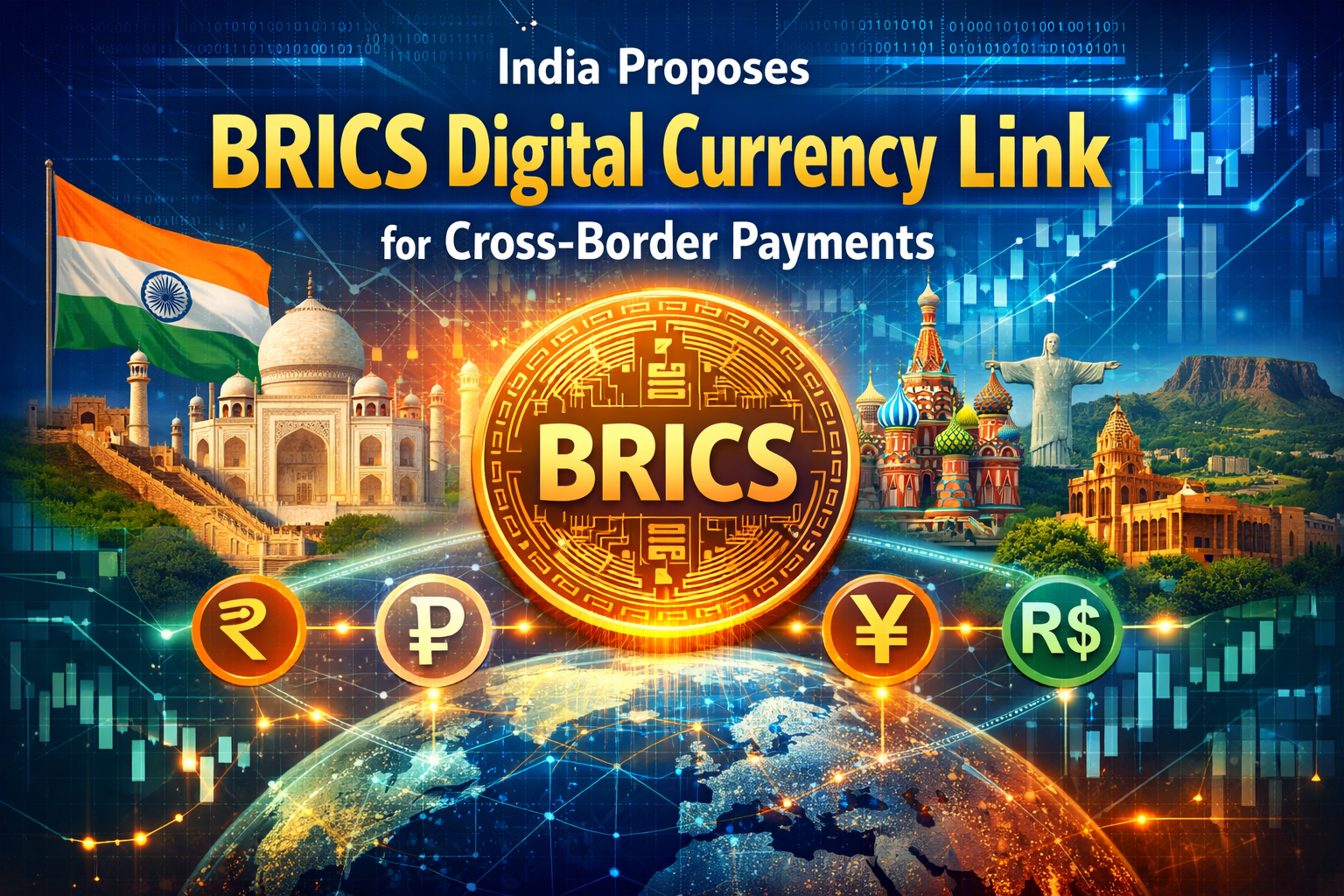
India is moving to position itself at the center of a potential transformation in global payments, as the country’s central bank advances a proposal to link the central bank digital currencies (CBDCs) of BRICS nations for cross-border transactions.
According to sources cited by Reuters, the Reserve Bank of India (RBI) has urged New Delhi to place the proposal on the agenda for the 2026 BRICS summit, which India is set to host. If endorsed, the initiative would mark the first coordinated attempt by BRICS members to build an interoperable digital currency infrastructure for international settlements.
RBI Pushes CBDC Interoperability
The RBI’s proposal focuses on connecting national CBDCs through a shared framework that allows seamless cross-border payments between BRICS economies. Such a system could support trade, tourism, and remittances by reducing transaction costs, speeding up settlement times, and limiting dependence on traditional correspondent banking networks.
Central bank officials view CBDC interoperability as a way to modernize payment rails while preserving monetary sovereignty. Rather than creating a single BRICS currency, the framework would enable direct settlement between national digital currencies using common technical standards.
Expanded BRICS Participation
The initiative would involve original BRICS members—Brazil, Russia, India, China, and South Africa—along with newer entrants such as the United Arab Emirates, Iran, and Indonesia. Together, the expanded bloc represents a growing share of global trade, energy flows, and population.
All major BRICS economies are currently operating CBDC pilot programs rather than full-scale retail deployments. This parallel stage of development could make coordination easier, particularly around messaging standards, compliance frameworks, and settlement mechanisms.
Diversifying Cross-Border Settlements
A key objective of the proposal is to diversify settlement options for cross-border trade. By enabling CBDC-to-CBDC transactions, BRICS countries could reduce reliance on intermediary currencies for intra-bloc payments, lowering currency conversion risks and operational costs.
Policymakers involved in the discussions emphasize that the initiative is designed to complement existing financial systems, not replace them. The focus remains on efficiency, resilience, and optionality within global payment infrastructure.
Global Policy Implications
Any coordinated digital currency effort among major emerging economies is likely to draw international attention. U.S. officials have previously voiced concerns over initiatives that could weaken the dollar’s dominance in global finance, and a BRICS CBDC link may prompt renewed policy discussions.
Supporters argue that the proposal reflects broader global trends, as central banks worldwide explore digital currencies to improve transparency, reduce friction, and enhance cross-border settlement efficiency.
India’s e-Rupee Momentum
India has been among the more active BRICS members in advancing CBDC adoption. The RBI launched the digital rupee, or e-rupee, in December 2022 and has gradually expanded its use cases. The central bank reports that the e-rupee has attracted around 7 million retail users.
Recent upgrades include offline payments, programmable transfers for targeted subsidies, and integration with fintech platforms. These features could support future cross-border retail use cases, particularly for tourism and remittance flows.
China’s Digital Yuan Experience
China continues to expand trials of its digital yuan, including cross-border pilot programs and broader participation by commercial banks. Reports suggest Chinese authorities are allowing interest payments on digital yuan holdings, a move that could further encourage usage.
Given its scale and technical maturity, China is expected to play a significant role in shaping any BRICS-wide CBDC framework, although governance, data-sharing, and trust issues will remain central to negotiations.
Trade Pressures Add Urgency
The RBI’s proposal comes as global trade dynamics push countries to explore more resilient payment systems. Ongoing tariff disputes and geopolitical uncertainties have highlighted the value of diversified settlement channels that can support uninterrupted trade.
For India, strengthening digital payment links with key partners aligns with its broader strategy to enhance trade efficiency and reduce friction in cross-border commerce.
What Comes Next
Despite growing momentum, substantial challenges remain. Technical interoperability, regulatory alignment, cybersecurity safeguards, and data governance standards will all need to be addressed before a BRICS CBDC link becomes operational.
Still, India’s push reflects a broader shift among emerging economies toward modernizing global payment infrastructure. If advanced at the 2026 BRICS summit, the proposal could mark an important step toward a more efficient, interoperable, and multipolar digital financial system.