 qerranews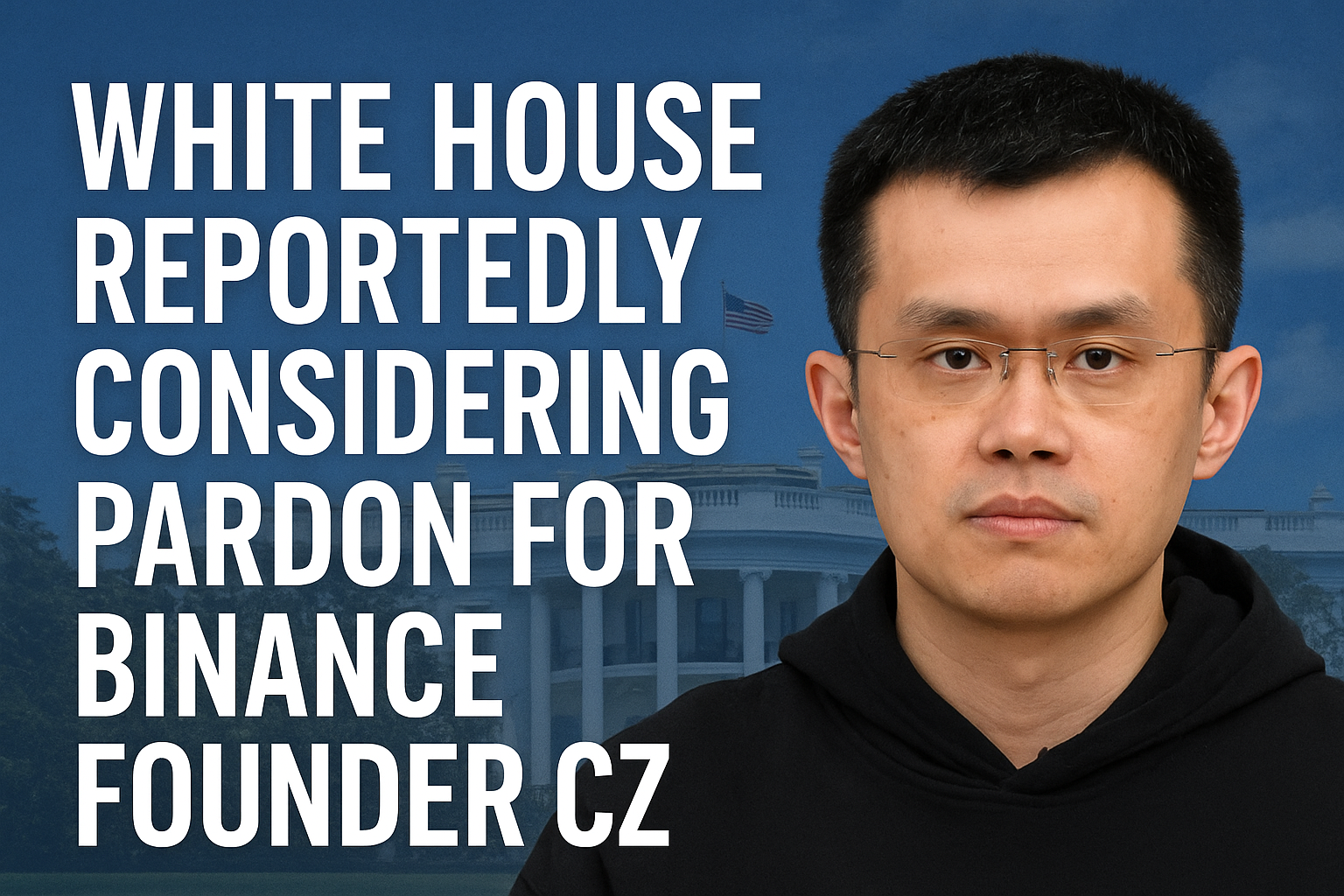
White House Eyes Binance Founder Pardon
The White House is reportedly “leaning toward a pardon” for Binance co-founder Changpeng “CZ” Zhao, who pleaded guilty to money laundering charges in 2024 and served four months in prison.
According to Fox Business correspondent Charles Gasparino, insiders close to the case claim the Trump administration views the conviction as excessive. “Trump… is leaning toward a pardon (consider the source), which could set the stage for CZ’s return to the crypto exchange since he remains Binance’s largest shareholder,” Gasparino said.
The potential pardon would mark another major moment in the Trump administration’s pro-crypto stance, as the president aims to roll back enforcement actions taken against digital asset figures during previous administrations.
Trump Administration’s Crypto-Friendly Stance
Under President Trump, the White House has visibly shifted toward a more crypto-supportive policy framework. Several regulatory agencies have relaxed enforcement measures, and Congress has made progress on long-awaited legislation to regulate the crypto industry more clearly.
Trump has also shown direct support for digital assets through his personal ventures, including the launch of his World Liberty Financial (WLFI) token and NFTs, reinforcing his image as a crypto-friendly leader.
Recent reports indicate that Trump’s administration has already pardoned figures such as BitMEX founders Arthur Hayes and Ben Delo, as well as Silk Road founder Ross Ulbricht, citing overreach in their original prosecutions.
CZ’s Response to Pardon Rumors
Despite the growing speculation, Changpeng Zhao himself appeared unaware of any formal pardon offer. On Friday, Zhao replied to Gasparino’s report on X (formerly Twitter), stating:
“Thank you, Charles. Great news if true. Minor correction, there were no fraud charges. I pleaded to a single violation of the Banking Secrecy Act (BSA).”
Zhao clarified that he was convicted for a single BSA violation—not for fraud or theft—and claimed that no one else in U.S. history had been imprisoned solely for such a violation.
“I believe I am the only person ever sentenced to jail in U.S. history for one BSA violation, with no other charges or prior history,” Zhao added.
His tone suggested cautious optimism but no confirmation of inside knowledge regarding a possible White House pardon.
Binance’s Legal Battles and Penalties
In November 2023, Binance reached a historic settlement with U.S. authorities, agreeing to pay a $4.3 billion fine. The exchange admitted to compliance failures under the Bank Secrecy Act, which included insufficient anti-money laundering (AML) controls.
As part of the settlement, CZ stepped down as CEO, paid a $50 million personal fine, and accepted a ban from holding management roles at Binance.
Despite the penalties, Zhao remains Binance’s largest shareholder and continues to wield influence behind the scenes. His reputation within the crypto community, while dented, remains largely positive—especially among traders who view him as a pioneer of global crypto adoption.
Trump’s Crypto Ties Raise Concerns
Gasparino noted that a final decision on the pardon may come soon but emphasized the “optics issue” surrounding Trump’s potential move. Some officials within the administration reportedly fear that a pardon could appear self-serving, given Trump’s direct business interests in the cryptocurrency space.
Trump’s involvement in World Liberty Financial (WLFI) and memecoin ventures has already raised ethical questions. Critics argue that a pardon for CZ could be perceived as favoring allies in the crypto world, especially as Trump’s administration shapes the next phase of digital asset policy.
Gasparino added that while the idea of a pardon is on the table, the president’s schedule remains dominated by larger geopolitical challenges, such as negotiations involving the Israeli hostages, the Gaza conflict, and the ongoing Ukraine war, as well as trade talks with China.
Post-FTX Enforcement Backlash
Some analysts argue that the CZ case was an overreaction by U.S. regulators following the collapse of Sam Bankman-Fried’s FTX.
Former FOX Business reporter and Crypto in America podcast host Eleanor Terrett stated that several crypto executives believe the charges against CZ were part of a “political response” meant to restore confidence after the FTX disaster.
“CZ wasn’t accused of fraud like SBF, and many industry players see his jail sentence as the result of regulators—still with egg on their faces post-FTX—making an example out of anyone operating in or around U.S. crypto markets,” Terrett said.
By contrast, Sam Bankman-Fried (SBF), the former CEO of FTX, was convicted of seven felony charges and sentenced to 25 years in prison in 2024, with billions of dollars in investor losses tied to his exchange’s collapse.
The contrasting outcomes between CZ and SBF underscore how Binance’s case was seen by many as regulatory overreach rather than outright fraud.
Market Reaction to Pardon Speculation
News of the possible pardon has triggered mixed reactions across the crypto community. While many Binance supporters celebrated the idea as a victory for fair justice, others warned of potential political motives behind Trump’s decision.
Crypto markets briefly saw BNB (Binance Coin) rise by nearly 3% in early trading, reflecting renewed optimism about Binance’s leadership stability. Analysts noted that CZ’s potential reinstatement, even informally, could strengthen Binance’s long-term positioning in global crypto markets.
Still, the White House has not officially confirmed the discussions, and Binance’s spokesperson declined to comment on “ongoing speculation.”
Broader Implications for Crypto Regulation
If granted, a CZ pardon could mark a pivotal moment in the evolution of U.S. crypto policy. It would reinforce Trump’s campaign narrative that the U.S. should lead the digital finance revolution, not suppress it through regulation.
Experts suggest the pardon might also inspire renewed investor confidence in the American crypto landscape, signaling a government intent on reforming outdated compliance frameworks.
However, critics caution that selective leniency could undermine accountability and encourage “too big to jail” perceptions within the crypto industry. The balance between innovation and regulation remains a central debate as the 2025 election cycle unfolds.
What Comes Next for CZ and Binance
As of now, Changpeng Zhao has completed his sentence and continues to live quietly while maintaining his stake in Binance.
A presidential pardon would restore his ability to legally engage in leadership or advisory roles within the company, though regulatory approval might still be required in certain jurisdictions.
If confirmed, the pardon could also reshape global perceptions of U.S. crypto policy, potentially encouraging other nations to adopt more flexible frameworks for digital asset regulation.
Conclusion: A Defining Moment for Crypto Politics
Whether or not Trump’s White House ultimately grants the pardon, the very consideration underscores the administration’s strategic pivot toward crypto acceptance.
For Changpeng Zhao, it represents a potential redemption arc after one of the most publicized legal battles in crypto history.
For the industry, it could signal that Washington’s era of crypto hostility is ending, replaced by a new chapter of collaboration, regulatory clarity, and political influence in digital finance.