 qerranews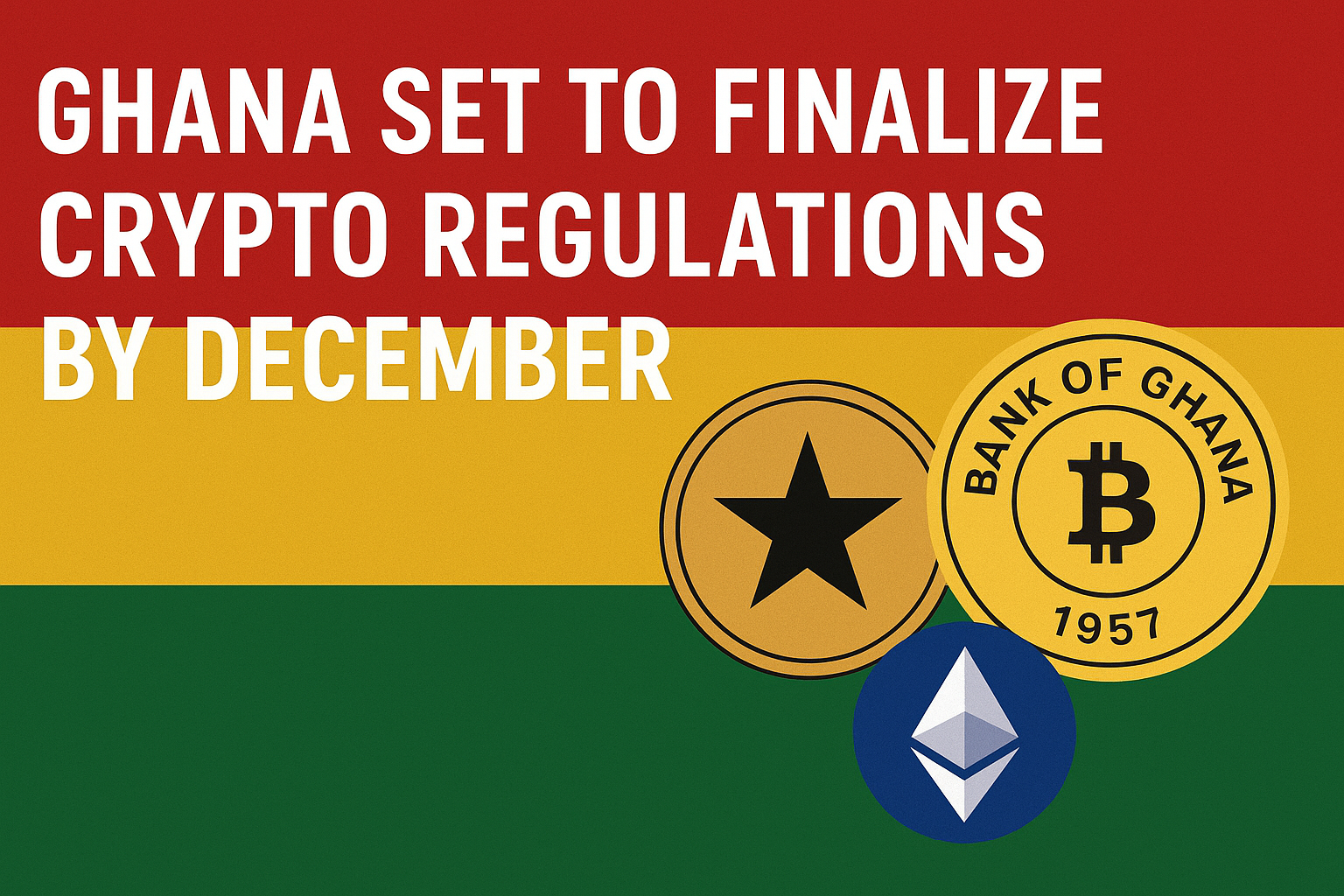
Ghana Moves Toward Crypto Regulation
Ghana’s central bank is taking decisive steps to finalize its cryptocurrency regulations by December 2025, marking a crucial shift in the West African nation’s approach to digital assets.
According to the Bank of Ghana (BoG) Governor Johnson Asiama, the country has made “significant progress in the past four months” in creating a regulatory environment for cryptocurrencies. Speaking at the International Monetary Fund (IMF) meetings in Washington, Asiama revealed that the bill is ready and will soon be submitted to parliament.
He emphasized, “That bill is on its way to parliament, and hopefully before the end of December, we should be able to regulate cryptocurrencies in Ghana.”
This development comes just a week after Kenya passed its own crypto regulation bill, setting a trend for African nations to embrace digital asset frameworks.
Ghana Follows Regional Crypto Momentum
Across Africa, countries are rapidly moving toward establishing cryptocurrency frameworks. Kenya’s Virtual Asset Service Providers (VASP) Bill, passed on October 7, has set licensing and consumer protection standards for exchanges, brokers, and token issuers.
Similarly, South Africa has been developing digital asset licensing systems, while Nigeria launched its Central Bank Digital Currency (CBDC), the eNaira, in 2021.
For Ghana, this regulatory effort represents a critical attempt to balance innovation with oversight. The country previously issued draft crypto guidelines in August 2024 and invited public feedback, showing a clear intention to engage stakeholders in shaping its regulatory landscape.
Monitoring and Enforcement Key Priorities
While creating laws is an essential first step, Governor Asiama acknowledged that enforcing them effectively will be equally important.
“The ability to monitor crypto flows will be key,” he stated. “We are developing the expertise, we are developing the manpower. We are putting together a new department that will help us regulate effectively.”
The BoG is prioritizing training and resources to track digital transactions, prevent illicit activities, and ensure compliance. Asiama added that Ghana can “no longer ignore” the crypto market and must be proactive to manage its growth responsibly.
Crypto Usage Surges Across Ghana
Despite the absence of a formal regulatory structure, crypto adoption in Ghana continues to grow rapidly. Data from Demandsage estimates that over 3 million Ghanaians—approximately 8.9% of the country’s population—are engaged in cryptocurrency in some form.
This high adoption rate demonstrates increasing public trust and interest in digital assets as alternative investment vehicles and remittance tools. Asiama noted that such widespread usage makes regulation not only necessary but inevitable.
He added, “We could not leave it unattended. As policymakers, we must have some control to prevent abuse of the system.”
The BoG’s approach seeks to strike a balance between protecting consumers and fostering innovation in the fast-growing digital economy.
Digital Sandbox and Fintech Growth
The Bank of Ghana has also introduced a digital sandbox environment, providing a safe testing space for fintech startups and crypto innovators. This initiative allows select companies to experiment with blockchain-based solutions under regulatory supervision.
Such efforts show the BoG’s willingness to integrate crypto technologies within a controlled framework. It also aligns with the broader vision of enhancing financial inclusion and supporting local startups in Ghana’s growing tech ecosystem.
Ripple’s recent partnership with Absa to expand bank-grade crypto custody services across Africa further highlights the continent’s accelerating adoption of blockchain infrastructure.
Regulate or Risk Falling Behind
Industry experts warn that Ghana must act quickly to remain competitive in the digital economy. Isaac Simpson, Senior Head of Financial Advisory and Equity Capital Markets at Stanbic Bank Ghana, cautioned that “the digital train has left the station,” and delay could prove costly.
“Nigeria, Kenya, South Africa, and Rwanda are already miles ahead,” Simpson said. “They are piloting CBDCs, issuing digital licenses, and attracting global crypto capital. Ghana has a choice: lead or be disrupted.”
He added that regulatory inaction could result in lost tax revenue, unchecked illicit flows, and a growing unregulated youth-led digital market outside state control.
Final Steps Toward Legal Framework
With parliament expected to review the crypto regulation bill before the end of December, Ghana is positioning itself as one of Africa’s forward-looking economies in digital finance.
Once passed, the law will establish clear rules for exchanges, wallets, and digital asset services, ensuring both consumer protection and government oversight.
If successful, Ghana could become a model for balanced crypto regulation in Africa—encouraging innovation while safeguarding economic stability.
As the global crypto landscape evolves, Ghana’s proactive stance may mark a defining moment in Africa’s digital finance journey.