 qerranews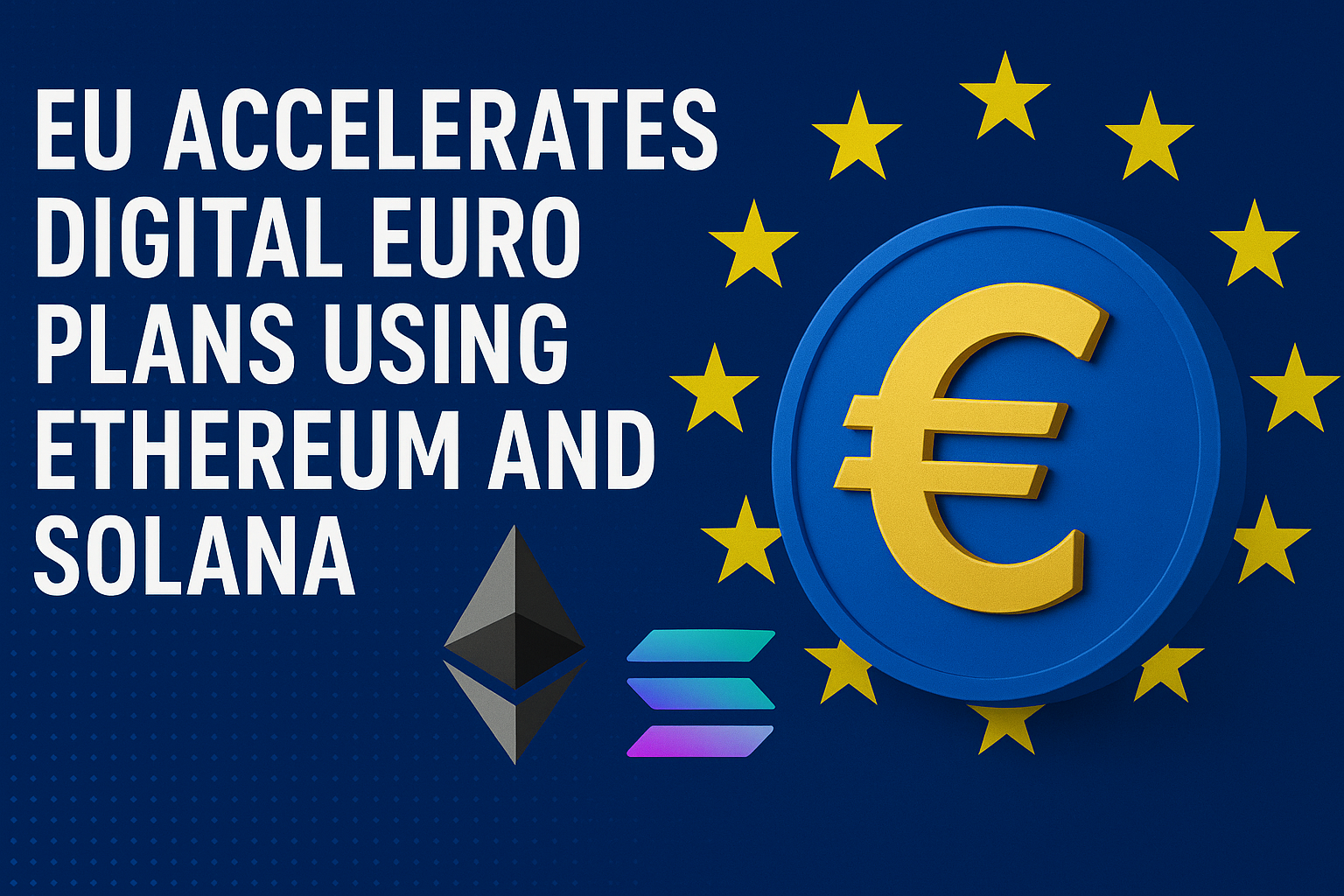
EU Pushes Digital Currency Forward
The European Union (EU) is intensifying its efforts to bring the digital euro to life, with new momentum spurred by global competition in the central bank digital currency (CBDC) race.
For several years, the European Central Bank (ECB) has researched the idea of a euro-backed CBDC. Its purpose: provide citizens and businesses with an electronic form of cash usable across the Eurozone. But as the world’s largest economies race ahead with their own digital currency plans, Europe is under pressure not to fall behind.
An Aug. 22 Financial Times report revealed that the EU is now exploring not only a faster launch timeline but also broader technology frameworks for deployment. The urgency stems from two key developments:
- The rise of stablecoins like USDT and USDC, which dominate the global $288 billion stablecoin market and threaten to strengthen dollar dominance.
- The U.S. regulatory shift, after the passage of the GENIUS Act, which has provided clarity and confidence for crypto adoption in the United States.
Together, these forces have pushed EU officials to accelerate their timelines and look to blockchain ecosystems that already power global finance.
Why EU Fears Dollar Dominance
The digital euro initiative is not just a technological upgrade; it is also a strategic necessity.
USD-backed stablecoins already account for the vast majority of stablecoin circulation worldwide, embedding the U.S. dollar deeper into global trade and digital payments. If this trend continues unchecked, the euro risks becoming less relevant in international markets.
European officials believe that the digital euro could act as a counterbalance, reinforcing euro influence in global finance. Unlike private stablecoins, the digital euro would be issued and guaranteed by the ECB, providing the same trust and security as physical euro banknotes.
ECB Executive Board Member Piero Cipollone emphasized earlier this year that while cash will remain in circulation, it “cannot do the job” in a digital-first economy. A euro CBDC would ensure public money remains accessible, support innovation, and preserve monetary sovereignty in the face of rapid change.
The push for a publicly trusted digital alternative also comes as Big Tech payment systems—such as Apple Pay, Google Pay, and PayPal—gain influence in the European financial ecosystem. A digital euro would give the ECB leverage in an increasingly digitized payments landscape.
Ethereum and Solana Considered Seriously
Initially, plans for the digital euro focused on a private blockchain model controlled directly by the ECB. This approach would have kept payment data, wallets, and infrastructure within the central bank’s authority.
However, officials are now pivoting to examine whether public blockchains could provide greater reach, interoperability, and adoption. The report highlights Ethereum and Solana as the leading candidates.
Why Ethereum?
- Proven security and adoption: Ethereum secures billions in assets, with thousands of developers contributing to its ecosystem.
- Smart contract functionality: The flexibility of Ethereum could support programmable money, automated compliance, and innovative financial applications.
- Global network effect: Ethereum’s established presence ensures international reach, aligning with the EU’s goal of global adoption.
Why Solana?
- High speed and low cost: Solana processes thousands of transactions per second at a fraction of the cost of traditional systems.
- Scalability: Its architecture is designed for mass adoption, potentially handling a pan-European payment network.
- Growing financial adoption: Solana’s partnerships in payments and DeFi ecosystems make it a practical candidate for a retail-ready CBDC.
Using public chains could boost transparency, encourage developer participation, and even expand the euro’s use beyond Europe. But this approach also comes with risks: governance disputes, network outages, and the challenge of balancing privacy with compliance.
Banks Push Back on Digital Euro
While EU policymakers are bullish on the digital euro, Europe’s banking sector remains cautious—if not resistant.
Banks fear that if citizens can directly hold funds in ECB-backed wallets, they may move deposits away from commercial banks. This could disrupt the traditional financial services model, reduce lending activity, and alter the balance of European banking.
Some European banks argue that the digital euro could become a direct competitor to their services, particularly payment processing and deposit accounts. They want guarantees that the CBDC will complement, not replace, existing systems.
Earlier reports revealed proposals to cap individual digital euro holdings—for example, limiting wallets to €3,000—to prevent mass withdrawals from banks. Such measures would ease concerns but could also limit adoption and reduce the digital euro’s appeal.
Despite the pushback, ECB officials argue that the project is necessary to modernize payments, preserve European monetary sovereignty, and keep pace with U.S. and Chinese initiatives.
Digital Euro Launch Timeline Uncertain
As of now, the timeline for the digital euro rollout remains unclear.
The ECB previously floated October 2025 as a potential launch window. But with new urgency surrounding U.S. regulatory developments and stablecoin adoption, some insiders believe the launch could be fast-tracked.
Still, several hurdles remain:
- Legislative approval by the European Parliament and EU member states.
- Regulatory frameworks for privacy, compliance, and financial stability.
- Technical implementation, including whether to adopt a public blockchain solution.
If successful, the digital euro could mark one of the biggest transformations in European financial history, reshaping payments, trade, and the balance of global currency power.
What It Means for Global Finance
The EU’s exploration of Ethereum and Solana for the digital euro is a powerful signal. It shows that public blockchains are no longer seen as fringe technology but as infrastructure for state-backed money.
If implemented, the digital euro could:
- Provide a trustworthy digital alternative to USD stablecoins.
- Strengthen the euro’s position in global markets.
- Encourage cross-border financial innovation.
- Inspire other governments to adopt hybrid CBDC models leveraging public chains.
But its success will hinge on whether the EU can balance innovation with stability—embracing decentralized networks while maintaining control over monetary policy.
As the race for digital currencies accelerates, Europe’s choice of technology could determine not only the euro’s future relevance but also the global balance of financial power.