 qerranews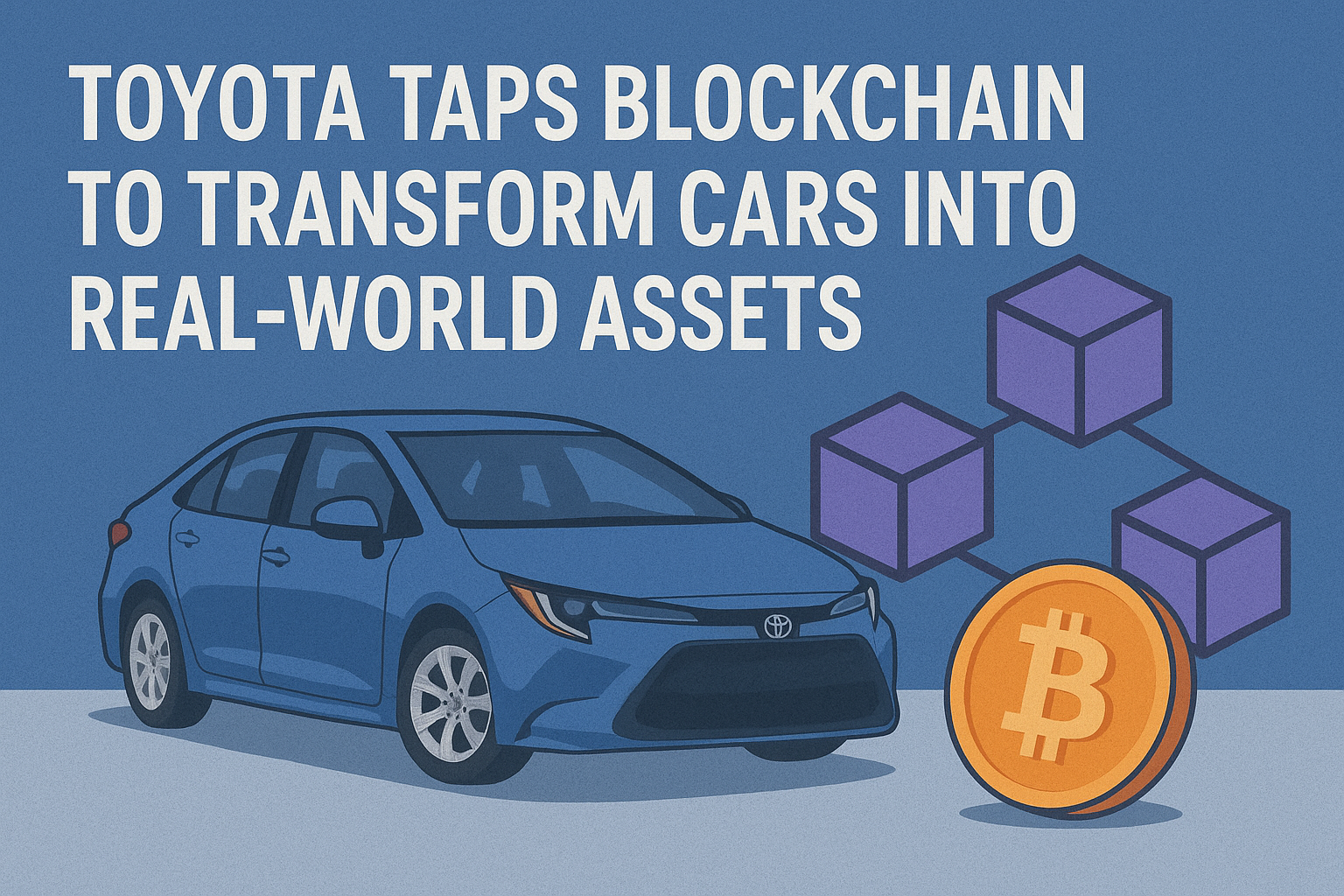
Toyota Explores Blockchain for Car Tokenization
Japanese automaker giant Toyota is setting its sights on a groundbreaking transformation of car ownership. On August 19, Toyota Blockchain Lab released a white paper detailing its Mobility Orchestration Network (MON)—a blockchain-powered framework designed to record, track, and tokenize vehicles.
The concept marks a potential shift in how cars are valued, sold, and even invested in, with Toyota proposing that every vehicle—from individual cars to large-scale fleets—could exist on the blockchain as a non-fungible token (NFT).
Unlike traditional ownership records, these NFTs would contain detailed, verifiable histories of each vehicle, including registration, manufacturing, maintenance, and usage. This innovation would turn cars into real-world assets (RWAs) that could be traded, bundled, and securitized—similar to how real estate or financial products are managed today.
This move could bring cars closer to financialization, creating opportunities for investors, fleet managers, and consumers while challenging existing norms around car ownership.
How Blockchain Could Redefine Car Ownership
Traditionally, car ownership has been a depreciating expense rather than a wealth-building asset. Unlike housing, cars lose value quickly and have been difficult to integrate into broader financial systems. Toyota’s blockchain framework seeks to change that.
By attaching every car to its own blockchain-based NFT, Toyota envisions a transparent, decentralized system where all relevant vehicle data is accessible. This has several potential implications:
- Trustworthy Records: Buyers and investors could easily verify a car’s history without relying on third-party services or incomplete reports.
- Fractional Ownership: Cars, or even entire fleets, could be tokenized into smaller investment units, lowering the barrier for investors.
- Flexible Use Models: Ownership could be separated from usage, making it easier for individuals or companies to access cars without outright purchase.
The MON system could also reshape the used car market. Instead of relying on vague mileage numbers or inconsistent documentation, potential buyers could instantly access a car’s full history on-chain, making valuation far more accurate.
Cars as Tradable Real-World Assets
Toyota’s white paper suggests that turning cars into RWAs could open up entirely new financial models. For instance, companies could bundle multiple car NFTs into funds, enabling investment in rental fleets, robo-taxis, or logistics vehicles.
This securitization process would be similar to real estate investment trusts (REITs), where property portfolios are bundled and sold as investment products. Fleet operators in emerging markets could particularly benefit by raising capital through blockchain-based car funds rather than relying on traditional loans.
Some key potential applications include:
- Robo-Taxi Fleets: Tokenized robo-taxis could be securitized, letting investors fund autonomous mobility services while receiving returns from ride revenues.
- Logistics Expansion: Logistics companies could issue tokens backed by vehicle fleets, raising cheaper capital for expansion into new markets.
- Rental Services: Rental car companies could tokenize their vehicles, providing investors with exposure to mobility revenues while diversifying financing methods.
By financializing cars, Toyota is hinting at a future where vehicles are not just depreciating goods but investment-grade assets.
Challenges and the Road Ahead
Despite its potential, Toyota’s MON framework raises questions. Unlike housing, cars rapidly depreciate and require frequent maintenance, making them more volatile as financial instruments. Additionally, the white paper does not directly address how this transformation might affect ordinary car owners.
For example, would everyday drivers be able to tokenize their cars, or would this primarily benefit large fleet operators? Could financialization make cars more expensive by attracting investors, or would it make vehicles more accessible through shared ownership models?
There are also regulatory hurdles. Tokenizing real-world assets requires compliance with securities laws, financial oversight, and standardization across jurisdictions—something still evolving in global blockchain regulation.
Still, Toyota’s exploration signals a larger trend in both the auto and blockchain industries. With real-world asset tokenization gaining momentum across real estate, commodities, and fine art, vehicles may be the next frontier.
If successful, Toyota’s experiment could redefine how we perceive mobility—shifting from personal ownership to blockchain-powered shared, securitized, and investable fleets.
Conclusion
Toyota’s Mobility Orchestration Network represents an ambitious attempt to bring blockchain into one of the world’s largest industries—automotive mobility. By transforming cars into tokenized real-world assets, Toyota is envisioning a future where vehicles are not only modes of transportation but also digital, securitized investment opportunities.
This could reshape fleet financing, open new investment models, and fundamentally alter how individuals and businesses interact with vehicles. While challenges remain in regulation, depreciation, and consumer adoption, Toyota’s initiative positions it at the forefront of blockchain-driven automotive innovation.
If successful, this approach may not only disrupt the automotive sector but also accelerate the integration of blockchain into the global economy.