 qerranews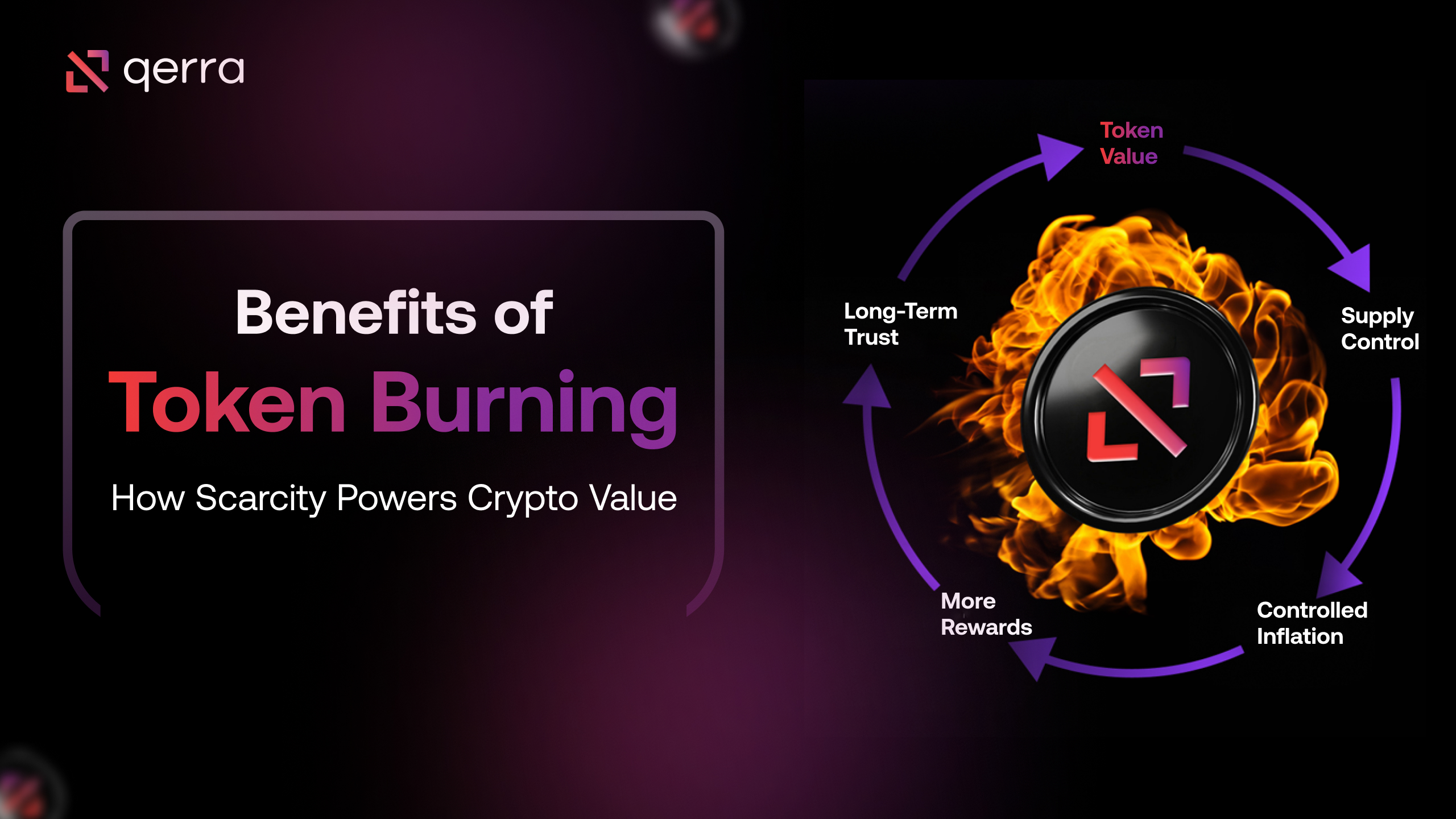
Cryptocurrency is often seen as the future of finance, but unlike traditional currencies controlled by central banks, it runs on a decentralized system where supply and demand largely determine its value. As this digital economy grows, projects are constantly seeking ways to balance supply, create long-term value, and strengthen trust among investors.
One of the most strategic methods used to achieve this is token burning. While the word “burning” might sound destructive, in reality, it’s a carefully planned process designed to benefit holders. Much like how companies buy back their shares to reduce supply and boost shareholder value, token burning permanently removes a portion of tokens from circulation, creating scarcity that can support price stability and growth.
But what exactly happens during a token burn? Why do projects use it, and how does it impact both the supply and the long-term value of cryptocurrencies? Let’s break it down in simple, practical terms.
What Does It Mean to Burn Crypto?
Token burning is the process of permanently removing tokens from circulation.
This is done by sending them to a burn address (sometimes called an “eater address”)—a special wallet that anyone can see on the blockchain but no one can access. Once tokens go in, they’re gone forever.
Think of it like a company buying back its shares and locking them in a vault with no key. The fewer shares available, the more valuable the remaining ones become.
That’s why token burning has become one of the most talked-about strategies in tokenomics—the economics behind crypto projects.
Benefits of Token Burning in Blockchain Networks
Let’s break down the core benefits of token burning and why they matter in business terms:
1. Increased Token Value (The Scarcity Effect)
Scarcity is one of the oldest economic principles. When supply goes down and demand stays the same—or grows—the price often rises. Token burning leverages this exact principle, making each token potentially more valuable over time.
2. Supply Control & Circulating Supply Management
Every token has a maximum supply, but not all tokens are in circulation. Burns help projects manage this balance by pulling tokens out of the market, keeping the ecosystem healthier and less prone to oversupply.
3. Controlled Inflation (Stability Against Fiat)
Unlike fiat currencies, where central banks often print money (leading to inflation), token burning does the opposite—it reduces supply. This makes burning a powerful tool for creating deflationary crypto models that attract investors looking for stability.
4. Boosted Community Engagement & Hype
Token burns aren’t just economic moves—they’re events. Communities often rally around major burns, celebrating milestones and creating viral moments. For example, the SHIB community famously tracks and celebrates every burn, boosting morale and visibility.
5. Investor Confidence & Long-Term Trust
When a project burns tokens, it signals commitment: “We’re here for the long haul.” Business owners should note that this kind of transparency builds trust with investors, showing that developers are invested in the token’s value.
6. Funding and Rewards Distribution
Some projects use burn mechanisms tied to transaction fees, meaning every trade contributes to burns or redistributes value to holders. This turns burning into a reward system, not just a scarcity tool.
7. Differentiation in Tokenomics (Deflationary as a USP)
In a crowded crypto market, projects need unique selling points. A well-designed burn mechanism can set a project apart, showing that its tokenomics are carefully structured for long-term sustainability.
8. Enhanced Transparency (On-Chain Verifiable Action)
Unlike vague promises in traditional finance, burns are visible on-chain. Anyone can check the blockchain and confirm whether a burn actually happened. That’s a level of accountability business owners should appreciate.
How Does Token Burning Affect Crypto Prices?
Here’s the million-dollar question: Does burning always make prices go up?
The honest answer: not by itself.
Think of burning like trimming the branches of a tree. It makes growth possible, but whether the tree actually flourishes depends on the soil, water, and sunlight. In crypto terms, that means demand, utility, and fundamentals.
Short-term effects:
Burns often spark hype. Announcements create a sense of scarcity, which can drive a rush of buying. Prices may jump temporarily as traders bet on quick gains. But once the excitement fades, tokens with no real use cases often drift back down.
Long-term effects:
Lasting value comes from projects where burns are paired with solid demand and consistent utility. When supply steadily decreases while people actually need the token, scarcity has real power.
Burning creates potential. But without strong fundamentals, it’s just smoke. Tokens with hype but no real demand can burn all day long and still fade away.
Conclusion
Token burning may sound like a destructive act, but in reality, it’s one of the smartest strategies in crypto. By reducing supply, it creates scarcity, encourages long-term holding, boosts investor trust, and strengthens the overall ecosystem.
For business owners, the takeaway is simple: token burning is a lever, not a magic bullet. It can amplify value, but only when paired with real utility, sustainable tokenomics, and an engaged community.
So the next time you hear about a project’s token burn, don’t just assume instant profits. Look deeper, study the fundamentals, and see if the burn is part of a bigger, smarter plan.
Because in the world of crypto, it’s not just about what you burn—it’s about what you build.