 qerranews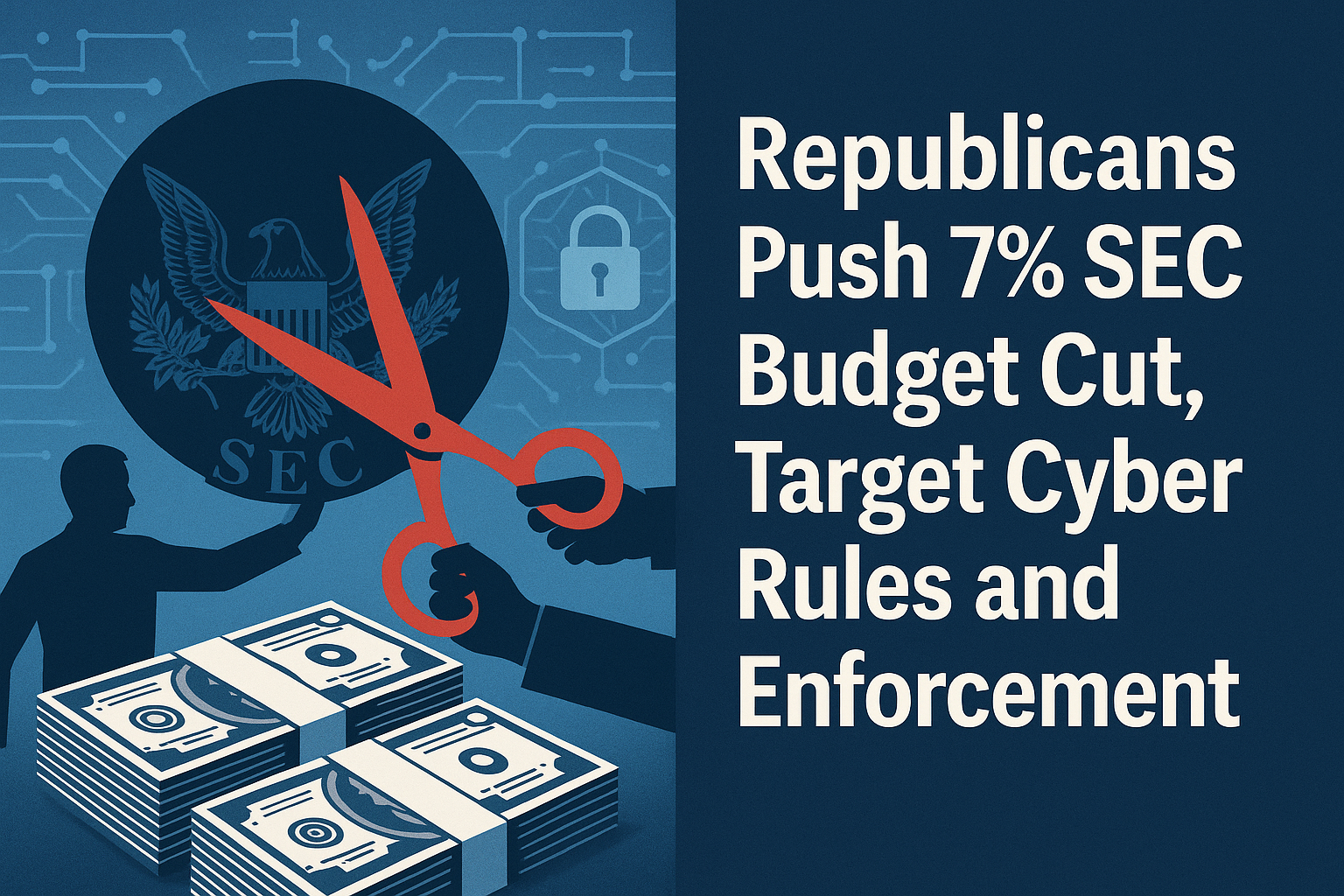
House GOP Targets SEC Spending
House Republicans are taking a sharp fiscal stance in their proposed 2026 federal budget, seeking a 7% reduction in the Securities and Exchange Commission’s (SEC) budget. This move is not just about cutting costs—it signals a deeper ideological challenge to the regulatory approach taken during President Biden’s administration, particularly around corporate cybersecurity and crypto enforcement.
The House Appropriations Financial Services subcommittee voted along party lines to advance a $23.3 billion budget proposal covering multiple federal agencies, including the SEC and the Treasury Department. If enacted, this would cut the SEC’s funding to just over $2.03 billion, a $153.9 million decrease from its fiscal year 2025 budget.
The proposal reflects broader Republican efforts to scale back financial oversight and rulemaking that the GOP sees as overreach. “This bill reins in wasteful spending,” said Subcommittee Chair Dave Joyce, aligning the proposal with broader conservative fiscal policy goals.
Cyber Rule Enforcement Defunded
One of the most controversial elements of the proposed SEC budget cut is the specific restriction on using funds to enforce a cyber disclosure rule passed in 2023. The rule requires public companies and foreign private issuers to disclose material cybersecurity incidents within four days—unless a delay is necessary for national security or public safety reasons.
The rule was intended to increase transparency and protect investors, especially as ransomware attacks and data breaches have surged in recent years. However, critics—especially in the GOP and within banking advocacy groups—argue the rule may inadvertently aid cybercriminals by forcing companies to reveal sensitive details too quickly.
In May 2025, a coalition of banking groups asked the SEC to repeal the rule, calling it a potential “extortion tool” for ransomware actors. The Coinbase incident added fuel to the debate, as the company disclosed a data leak and later refused a $20 million ransom. It’s now facing several lawsuits, and estimates suggest damages may reach $400 million.
The proposed ban on enforcing this rule has been framed by Republicans as a pro-business, anti-regulation measure. But Democrats argue it undermines protections for consumers, investors, and the broader digital ecosystem.
Crypto Regulations in Crosshairs
Beyond cybersecurity, the proposed budget reflects the GOP’s ongoing push to roll back Biden-era SEC crypto regulations. Over the past few years, the SEC—under Chair Gary Gensler—has taken an aggressive stance on digital assets, increasing enforcement and crafting guidelines meant to align crypto projects with existing securities laws.
These moves, however, have been met with opposition by Republican lawmakers and crypto industry players, who argue that overregulation stifles innovation and drives companies offshore.
The 2026 funding bill seeks to limit the SEC’s ability to use funds for several regulatory activities, including rules governing private securities offerings and tracking systems that collect personally identifiable information (PII).
While not explicitly referencing digital assets, these budgetary restrictions could impact the SEC’s ability to pursue data-intensive investigations in the crypto space and limit its enforcement reach.
Democrats Decry Rollback Efforts
Democrats wasted no time in voicing opposition to the Republican-backed budget bill. They argue that the proposal caters to corporate interests at the expense of average Americans and financial transparency.
“This bill is a blow to everyday Americans,” the House Appropriations Democrats posted on X (formerly Twitter). They claimed the measure allows companies to “skirt the law and hoard even more wealth.”
Committee Ranking Member Rosa DeLauro echoed that sentiment, warning that the funding plan would give corporations free rein to
“cheat on their taxes, poison consumers, and scam everyday Americans.”
The Democrats’ pushback highlights the ideological divide in Congress over the role of federal agencies like the SEC. For progressives, strong regulatory bodies are necessary to protect consumers, promote market fairness, and guard against systemic risk—especially in high-growth sectors like crypto and cybersecurity.
Republicans, by contrast, see the SEC’s expanding scope as a threat to business efficiency and innovation, particularly as it applies to fast-evolving markets.
What’s Next for the Budget Plan?
With the subcommittee vote completed, the bill now heads to the full House Appropriations Committee, where further debate and amendments may follow. Even if it clears the House, the measure faces likely opposition in the Democrat-controlled Senate and from the White House.
In March, the SEC had requested $2.149 billion for FY 2026 to support over 4,100 full-time staff, citing growing market complexity and threats from cyber and crypto sectors. The GOP proposal not only offers less but also places major restrictions on how that funding can be used.
This budget fight could evolve into a broader political battleground over federal oversight, with implications for corporate accountability, investor protections, and the future of digital finance regulation in the U.S.
The outcome may also serve as a bellwether for the 2026 midterm elections, especially as the parties sharpen their positions on government regulation, corporate transparency, and economic strategy.
Conclusion
The Republican plan to cut the SEC’s budget by 7% for fiscal year 2026 isn’t just about numbers—it’s about reshaping the agency’s role in the financial ecosystem. From slashing cybersecurity rule enforcement to potentially weakening crypto oversight, the move is a calculated part of the GOP’s deregulatory agenda.
Whether this proposal becomes law or gets reshaped in bipartisan negotiations, it underscores a fundamental divide in Washington over how much regulation is too much—and who should be protected in the modern economy.