 qerranews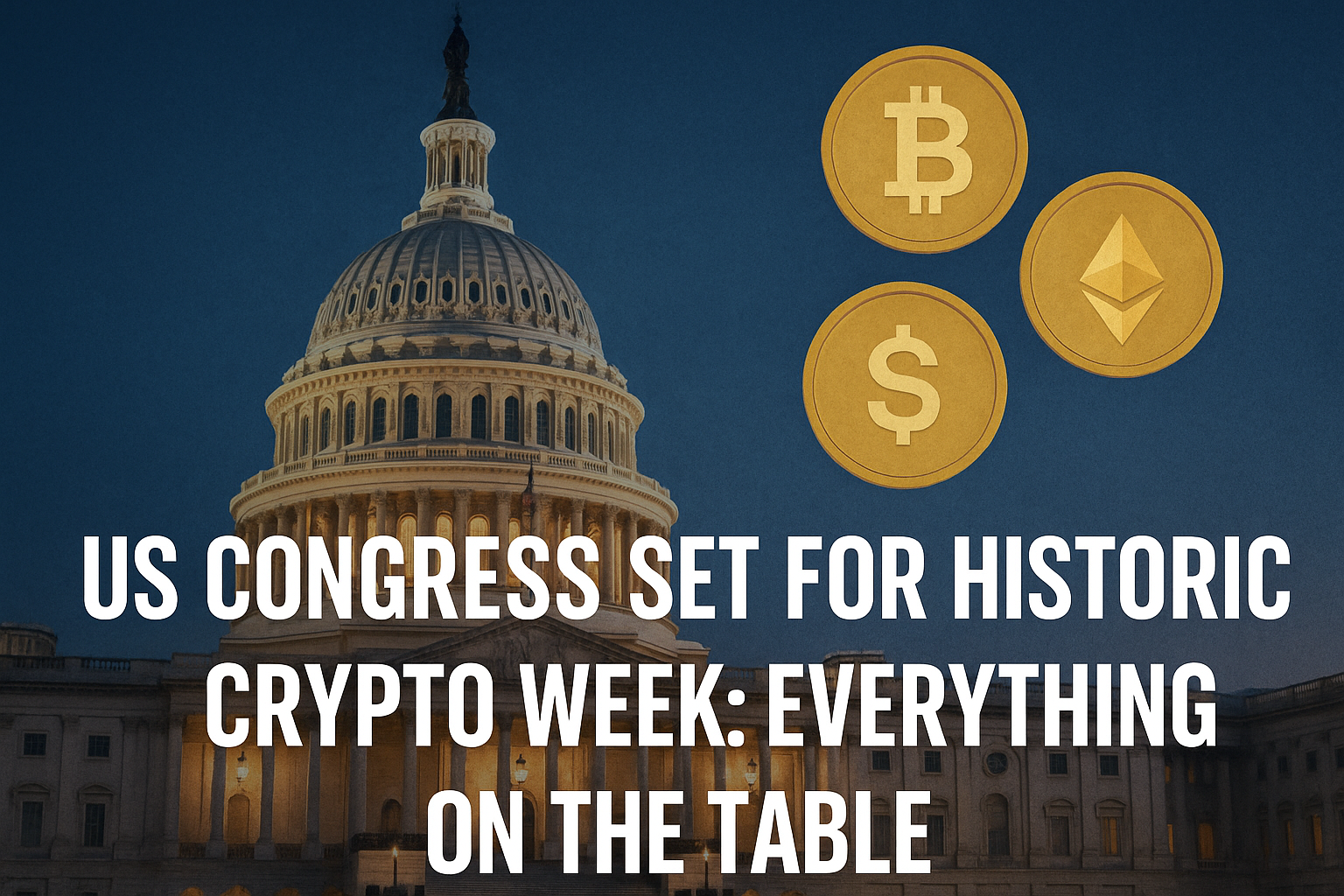
Crypto Week Begins in Congress
This week marks a historic moment for the U.S. digital asset landscape. Congress is set to deliberate on three major crypto-related bills, a move that could fundamentally shift how the country regulates digital assets. Dubbed “Crypto Week,” this legislative sprint reflects years of mounting pressure to bring clarity and federal oversight to the rapidly evolving crypto industry.
At the core of the congressional effort are three bills: the GENIUS Act, which governs stablecoin issuance; the CLARITY Act, which outlines the crypto market structure; and the Anti-CBDC Surveillance Act, aiming to ban a U.S. central bank digital currency. These bills will face votes in the House and—if passed—may finally establish a federal framework for crypto regulation.
Bills Address Governance Questions
The GENIUS Act, likely to pass first, aims to set foundational rules around stablecoins—digital assets pegged to fiat currencies like the dollar. Originating in the Senate, the bill has gained traction across party lines and is expected to clear the House without amendments.
This fast-tracked strategy—designed to push the bill to President Trump’s desk—is significant. If successful, the GENIUS Act would be the first major piece of crypto legislation to clear both chambers of Congress.
However, governance remains a sticking point. House Democrats, led by Rep. Maxine Waters, are pushing for amendments that include stricter oversight provisions. Meanwhile, crypto critics are labeling this push as a “Trump-era crypto takeover” aimed at benefiting politically connected ventures.
Market Structure Bill Faces Test
The second major piece of legislation—the CLARITY Act—addresses crypto market structure, including how digital assets are classified and which federal agencies regulate them. Authored by House Financial Services Committee Chair Rep. French Hill, the bill is expected to receive more resistance than the GENIUS Act.
While 71 Democrats supported a similar market structure proposal last year, that number may decline. The bill’s Trump-era influence, along with concerns over investor protection and regulatory arbitrage, may stall momentum in the Senate, where 60 votes are required.
Still, Hill remains optimistic. “The bills will protect investors, consumers, and make America, as President Trump wants, a leader in financial technology,” he stated.
CBDC Ban Adds Fuel
The third bill on the docket, the Anti-CBDC Surveillance Act, proposes banning a central bank digital currency (CBDC) in the U.S. The bill is a political lightning rod, reflecting broader fears that a government-issued digital dollar could lead to surveillance and financial overreach.
Rep. Warren Davidson, a staunch crypto advocate, has taken a surprising stance—opposing the GENIUS Act despite generally supporting digital asset innovation. He criticized the strategic separation of the bills as “designed to ultimately fail.”
While this anti-CBDC bill has little chance of passing the Senate, it plays a symbolic role in defining the ideological battleground for the future of money. Should it gain traction, the U.S. could diverge significantly from other global economies exploring CBDCs.
Tornado Cash Trial Opens Week
Crypto Week began with high legal drama as the U.S. v. Roman Storm case kicked off in federal court. Storm, one of the founders of privacy protocol Tornado Cash, is facing money laundering charges. The outcome could set legal precedents for developers of open-source crypto tools.
This case reflects deeper divides around crypto’s core ethos: decentralization, privacy, and resistance to censorship. It also provides a sharp contrast to the congressional effort to impose structure, regulation, and national oversight on the same technologies.
Partisan Divide Deepens
At the heart of Crypto Week is a deepening partisan divide on how the U.S. should treat digital assets. Republicans are charging forward with legislation, largely aligned with President Trump’s pro-crypto posture. Democrats, however, remain skeptical of rushed regulation without stronger consumer protections and ethical safeguards.
Some progressive lawmakers are branding the effort “Anti-Crypto Corruption Week,” signaling that they see these bills not as reform, but as political payback to crypto donors and Trump-aligned businesses.
This ideological clash could result in a fractured regulatory outcome—where only some bills pass, or none do—depending on how much bipartisan consensus can be built.
What Crypto Firms Should Expect
If any of these bills pass, the implications for crypto businesses will be far-reaching:
- Stablecoin Issuers may face federal oversight under a single regulatory body, ending the state-by-state approach.
- Exchanges and Custodians could benefit from more consistent compliance standards.
- Developers of decentralized protocols may face heightened scrutiny if the Tornado Cash precedent expands.
A federal framework would bring more legal clarity but also greater accountability—reshaping product design, liquidity practices, and compliance architecture for years to come.
Impact on Global CBDC Policy
One of the more overlooked consequences of the Anti-CBDC bill is its potential to affect global central bank strategies. While nations like China, the EU, and India continue exploring CBDCs, the U.S. rejecting one outright could fragment international monetary policy alignment.
A no-CBDC stance might make U.S. dollars less competitive in a digital economy but would likely bolster private-sector stablecoins as the de facto digital dollar.
This would empower U.S. fintech and crypto firms but could complicate cross-border settlements, monetary diplomacy, and dollar dominance long-term.
Will Congress Deliver Clarity?
Crypto Week is shaping up to be a defining moment in the U.S. digital asset journey. With three critical bills, multiple political agendas, and immense industry stakes, the coming days could either accelerate crypto policy—or deepen the legislative gridlock that has frustrated stakeholders for years.
The House Rules Committee is scheduled to set the voting timeline today. The final outcome may determine whether Congress takes a leadership role in crypto innovation—or falls further behind global regulators.
FAQs Section
Q: What is the GENIUS Act?
A: A Senate-originated bill that provides federal rules for stablecoin issuance, likely to be the first to pass.
Q: What is the CLARITY Act?
A: A bill outlining regulatory responsibilities for digital asset markets, including oversight by the SEC and CFTC.
Q: Why ban a CBDC?
A: Critics argue it could lead to government surveillance of private financial transactions and threaten financial privacy.
Q: What happens if all bills pass?
A: The U.S. would get a unified crypto regulatory framework for the first time, reducing uncertainty and fostering innovation.
Q: How does this affect other countries?
A: A U.S. rejection of CBDCs may isolate its monetary policy and encourage private stablecoin adoption globally.