 qerranews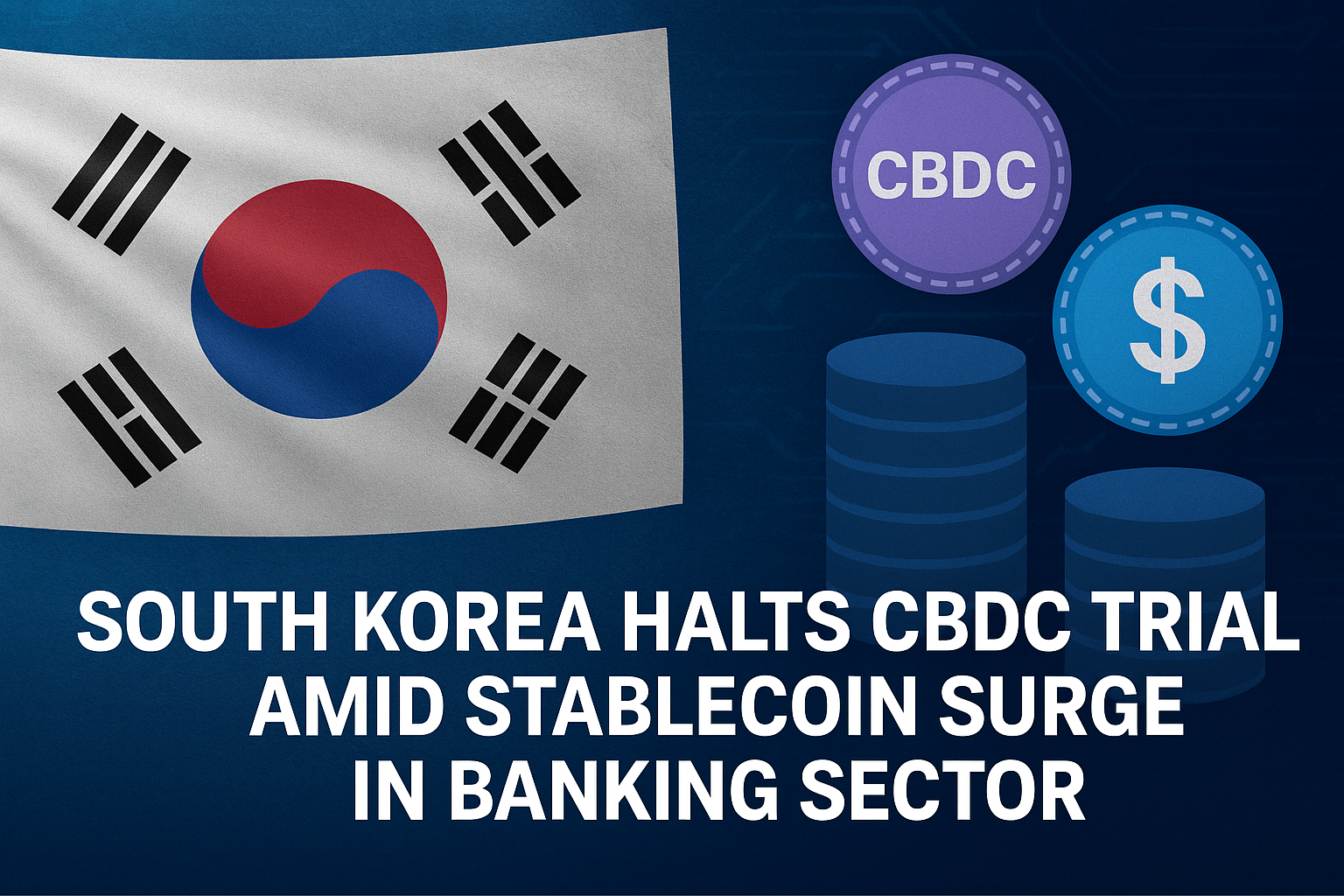
South Korea’s central bank has hit pause on its central bank digital currency (CBDC) testing, just as stablecoins gain momentum among the nation’s top financial institutions. The Bank of Korea’s (BoK) move to suspend the next phase of its CBDC pilot reflects a pivotal shift in the nation’s digital finance strategy—particularly as newly elected President Lee Jae-myung signals support for stablecoins over government-issued tokens.
This policy transition appears to have influenced major commercial banks, many of whom were previously onboard with CBDC experimentation but are now considering the development and issuance of their own Korean won-backed stablecoins.
CBDC Trials Face Major Pause
According to multiple South Korean media outlets including Yonhap News Agency and The Chosun Daily, the Bank of Korea informed participating institutions that the second round of CBDC testing, which was initially scheduled for later this year, has been postponed indefinitely. This announcement came after the successful completion of the first testing phase between April and June, which included around 100,000 participants trialing CBDC-based payments.
However, enthusiasm has waned. Seven major banks involved in the project have reportedly raised concerns over the high costs of participating and the absence of a clear commercialization strategy from the BoK. One senior official noted that the second stage was “on the verge of collapse,” signaling deep dissatisfaction among the institutions initially committed to the pilot.
To mitigate growing tensions, the central bank floated the idea of rescheduling the second phase to the first half of 2026, possibly with a reduced number of participating banks. This delay illustrates both logistical challenges and a philosophical divide over the future of digital currencies in South Korea.
Stablecoins Attract Bank Interest
As CBDC enthusiasm cools, stablecoins are taking center stage. Several South Korean banks are now reportedly exploring opportunities to develop their own won-pegged stablecoins, eyeing a more profitable and flexible future in digital finance. The pivot comes amid broader optimism around the regulatory framework for stablecoins under President Lee’s administration.
Unlike a CBDC—where issuance, control, and infrastructure lie in the hands of the central bank—stablecoins offer banks a more direct route to financial gain, customer engagement, and digital innovation. These crypto assets maintain price stability by being pegged to a fiat currency like the Korean won, and they can be used in decentralized finance (DeFi), remittances, and e-commerce.
Recent reports reveal that eight major South Korean banks are forming a consortium aimed at launching a won-backed stablecoin by 2026. This initiative could reshape South Korea’s digital payment ecosystem and lessen the urgency—or even the relevance—of a national CBDC.
New Government Crypto Direction
The policy shift is largely attributed to the new presidential administration. President Lee Jae-myung, who campaigned on several pro-crypto promises, has vocally supported the idea of legalizing and regulating stablecoins. His administration is expected to formalize new guidelines that would enable financial institutions to issue such tokens, aligning the country with the digital asset strategies seen in crypto-forward economies like Singapore and the UAE.
This new direction introduces a level of uncertainty for the future of a South Korean CBDC. While the central bank seeks to understand how a CBDC would integrate with privately issued stablecoins, the momentum appears to be swinging in favor of the latter. The BoK’s indecision could signal a long-term pivot away from national digital currencies—especially if banks find stablecoins to be more viable from both a business and regulatory perspective.
Furthermore, there’s growing acknowledgment that a dual system of public and private digital currencies may cause friction in the ecosystem. Financial institutions appear to prefer direct control over their digital instruments rather than participating in a centrally managed system with unclear revenue models.
Fintech Stocks React to News
The ripple effects of the CBDC pause and the shift toward stablecoins are already being felt in the stock market. Fintech companies in South Korea experienced mixed performances following the news. Mobile payment platform KakaoPay Corp saw its shares fall by 7% as of 2:00 PM local time, while Hecto Financial, another major player in digital payments, dropped roughly 5%.
In contrast, financial giants like KB Financial Group, which owns KB Kookmin Bank, enjoyed a modest 0.8% gain. Shinhan Financial Group fared even better, with a 1.6% increase in share price. Analysts attribute these contrasting movements to market sentiment around which companies are better positioned to benefit from a stablecoin-driven future.
This market reaction suggests that investors are starting to back companies involved in banking and crypto infrastructure, rather than fintech firms whose core business relies on third-party payments or wallets.
What’s Next for South Korea’s Digital Currency Landscape?
The big question now is whether South Korea will abandon its CBDC initiative entirely or continue its research while letting the private sector handle tokenized assets. The central bank’s decision to temporarily shelve testing indicates that it may lean on industry innovation for solutions while playing an oversight or regulatory role.
If the stablecoin consortium led by the eight banks proves successful, it could establish a domestic standard for tokenized fiat—rendering a centralized alternative redundant. However, the government and the Bank of Korea must ensure strong regulatory safeguards to prevent issues related to money laundering, misuse, or volatility.
Still, South Korea’s dynamic and tech-savvy financial sector positions it well to experiment with both public and private digital currencies. How the country manages this balance will set a precedent for other nations evaluating similar decisions.
Conclusion
South Korea’s decision to suspend its CBDC trials reflects more than just logistical delays—it reveals a changing narrative around the role of digital currency in a rapidly evolving financial ecosystem. With the new administration leaning into stablecoins and banks eager to seize financial opportunities, the country might very well become a global test case for how traditional institutions adapt to decentralized financial tools.
As stablecoins pick up steam and banks throw their weight behind new digital instruments, the future of South Korea’s financial innovation looks to be privately powered—even if it began with a central bank-led vision.