 qerranews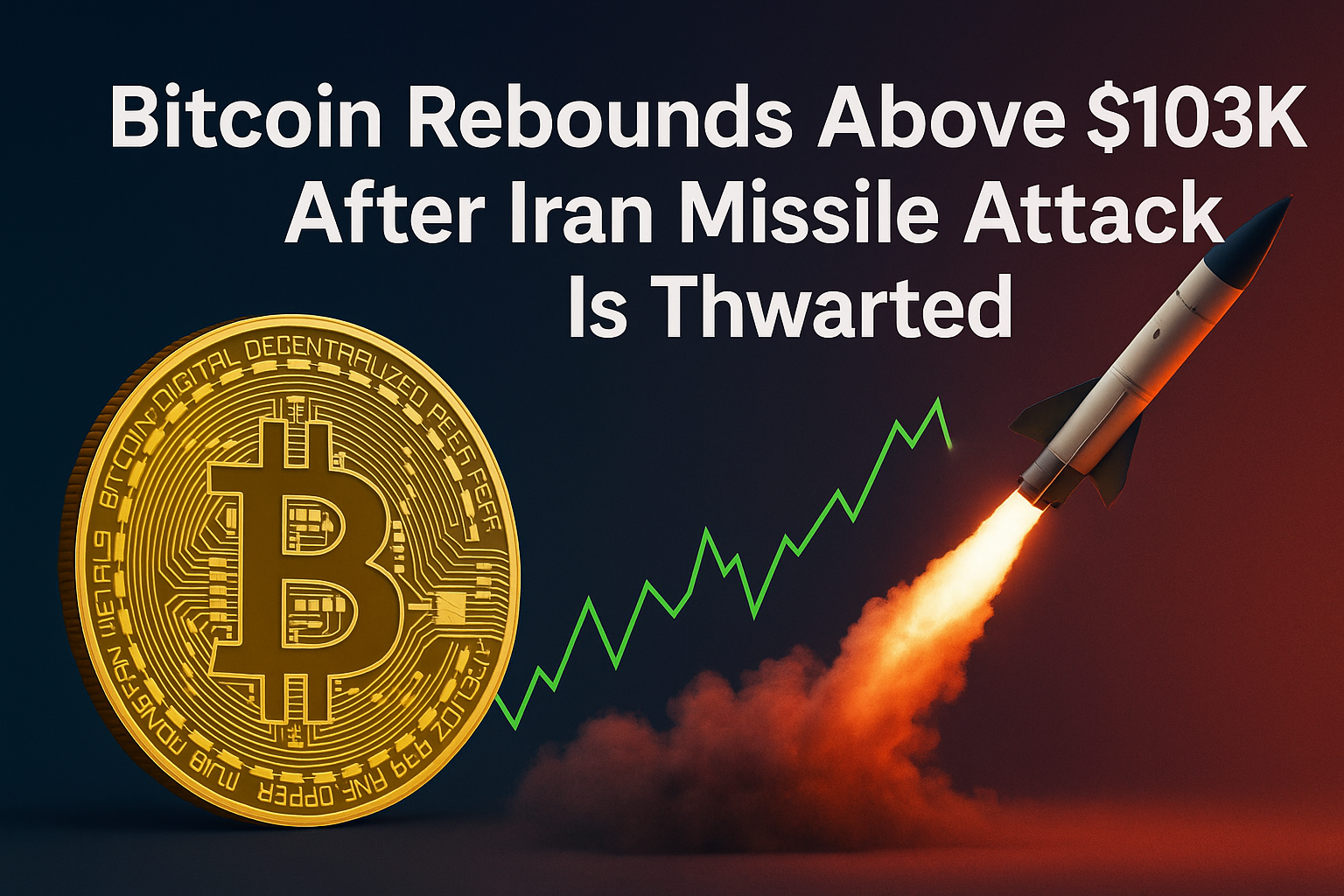
Bitcoin Climbs Back After Drop
Bitcoin rebounded sharply above $103,000 after initially falling to the $100,000 mark following reports of a missile strike by Iran. The attack, which targeted the Al Udeid Air Base in Qatar—a key U.S. military outpost—caused a ripple of fear across global markets, with risk assets like Bitcoin seeing an immediate sell-off.
According to multiple reports, Iran had launched ballistic missiles toward the U.S. military base in Qatar. However, the situation quickly deescalated when U.S. interceptor defense systems successfully neutralized the missiles midair, resulting in no casualties or major infrastructure damage.
Bitcoin, which had quickly dropped by over $3,000 within minutes of the news breaking, staged an equally fast recovery once reports of a successful interception and no casualties were confirmed. The relief rally saw Bitcoin bounce back above $103K, with a current trading level around $102,800 at the time of writing.
The V-shaped price recovery highlighted Bitcoin’s ongoing volatility, especially in response to geopolitical developments. However, it also revealed investor sentiment remains strong, particularly in moments when global events unfold without significant escalation.
Iran’s Attack Triggers Panic Selloff
Initial reports of the Iranian missile strike came late in the afternoon during U.S. trading hours, with Iranian state media announcing that missiles had been launched at both Al Udeid Air Base in Qatar and the Ain Al-Asad Airbase in Iraq. The sudden news triggered a wave of uncertainty in financial markets.
Bitcoin, which had been trading near $103K, dropped swiftly to the psychological $100,000 mark. Some exchanges even registered brief dips below that threshold. Crypto market analysts attributed the sudden drop to panic selling and short-term risk aversion among institutional traders and whales.
Further compounding the fear was the temporary closure of airspace across several Middle Eastern nations. Qatar, Iraq, Kuwait, Bahrain, and the UAE issued notices of airspace shutdowns, and U.S. military installations across the region were put on high alert. This raised fears of an impending broader conflict.
Despite the panic, early indicators suggested that a wider conflict might not materialize. The Qatari Ministry of Defense was quick to confirm that all incoming Iranian missiles had been intercepted successfully. This crucial development calmed market nerves and provided the foundation for Bitcoin’s swift recovery.
Qatar Confirms Interception Success
Qatar played a key role in managing and deescalating the situation. In an official statement, the Ministry of Defense confirmed that the U.S. missile defense system had intercepted all Iranian missiles aimed at Al Udeid Air Base. No casualties or significant infrastructure damage were reported.
Furthermore, The New York Times noted that Iran had given Qatar advance warning about the planned missile launches. This allowed Qatar to temporarily shut down its airspace and alert the U.S., contributing to a successful missile defense operation.
Axios reported that the White House had “good advance warning” about the missile attack, and the Trump administration was already on high alert. The successful defense and prior coordination helped mitigate the threat and reduce the possibility of further immediate escalation.
The crypto market, often sensitive to global political developments, responded swiftly. Bitcoin’s recovery was almost immediate, signaling that traders saw the event as contained and not a sign of larger geopolitical chaos—at least for now.
Bitcoin Shows Resilience, But Risks Remain
At the time of this writing, Bitcoin is trading around $102,800, up approximately 4% over the past 24 hours. The quick recovery from $100K to $103K demonstrated the resilience of crypto markets and investor confidence in Bitcoin as a macro asset.
However, risk remains. While Qatar has downplayed the chances of full-scale conflict, it also stated that it “reserves the right to respond” to any future acts of aggression. Regional tensions remain high, and any new developments could once again impact Bitcoin and other risk assets.
Moreover, with several countries—including Iraq, Bahrain, and the UAE—closing their airspace, the logistical and economic implications could still have an impact on global markets in the days ahead. The broader crypto market has remained slightly subdued, with Ethereum and other altcoins showing modest gains, reflecting cautious optimism.
Analysts suggest that Bitcoin’s movement during geopolitical stress may be evolving. While traditionally seen as a hedge asset, Bitcoin’s behavior during this incident mirrored that of traditional equities—dropping on bad news and rebounding on relief. This could signal a shifting narrative where Bitcoin is no longer seen solely as “digital gold” but also as a high-risk asset tied to broader investor sentiment.
Conclusion: Crypto Volatility Tied to Geopolitics
The recent Iran-Qatar missile incident has shown just how tightly connected Bitcoin’s price is to real-world geopolitical events. While the initial panic drove the price down sharply, confidence returned just as quickly following the successful missile interception.
Investors should note the evolving relationship between Bitcoin and global events. While Bitcoin has shown signs of maturity and resilience, its price movements remain highly sensitive to news cycles and sudden developments—especially those involving military conflict.
As tensions continue in the Middle East, traders and investors will likely keep a close eye on political headlines. Whether Bitcoin can hold above $103K will depend not only on on-chain metrics or market cycles but also on how these global events unfold.
For now, Bitcoin has once again demonstrated its ability to rebound strongly—but in a world where headlines move markets, staying informed is more crucial than ever.
Stay updated with live Bitcoin and crypto prices at qerra.news