 qerranews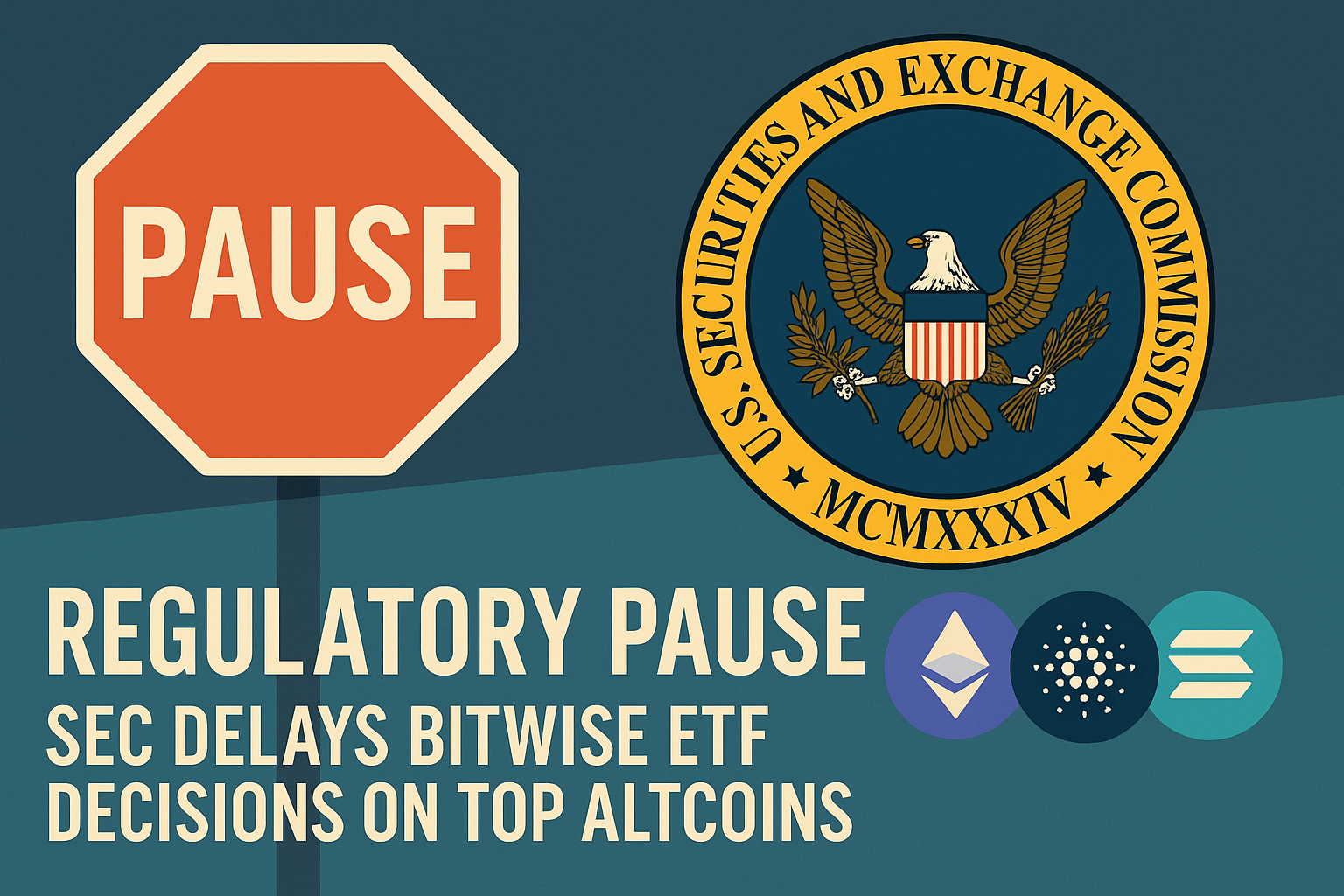
1. SEC Delays Fuel Market Uncertainty
In a highly anticipated move, the U.S. Securities and Exchange Commission (SEC) has officially postponed its decision on a set of exchange-traded fund (ETF) applications from Bitwise that would track the performance of major altcoins: XRP, Ethereum (ETH), Cardano (ADA), and Solana (SOL). This regulatory pause is stirring both concern and speculation in the cryptocurrency investment space, as market participants continue to seek clarity on digital asset regulation in the United States.
The applications submitted by Bitwise aimed to offer spot ETFs—funds that would directly hold cryptocurrencies rather than futures contracts. Spot crypto ETFs are viewed as crucial for mainstream adoption, providing retail and institutional investors with a regulated and more accessible way to gain exposure to digital assets.
This delay comes amid increasing pressure on U.S. regulators to define a clear legal framework for crypto assets. Though the SEC has already approved spot Bitcoin ETFs earlier in 2024, the expansion into altcoins has clearly prompted a more cautious approach.
2. Spot ETF Demand Remains Strong
Investor demand for spot ETFs—especially those tied to leading altcoins—has been growing steadily. The successful launch of spot Bitcoin ETFs earlier this year drew billions in assets under management (AUM) within weeks, demonstrating strong market appetite. A similar outcome is expected if the SEC eventually greenlights ETFs based on Ethereum, XRP, Cardano, and Solana.
The delay does not indicate a rejection, but rather an extended period for public comment and further internal review. It’s worth noting that each of these cryptocurrencies occupies a unique position within the crypto ecosystem:
- Ethereum (ETH) powers the most widely used smart contract platform.
- XRP is known for cross-border payments and partnerships with financial institutions.
- Cardano (ADA) emphasizes academic research and sustainability.
- Solana (SOL) offers high-speed and low-cost transactions, ideal for DeFi and NFT projects.
These factors make them top contenders for ETF products, as they represent both market capitalization strength and technological diversity.
3. Regulatory Caution Signals Mixed Intent
While the SEC has shown a gradual willingness to approve digital asset investment vehicles, the current pause raises questions about its stance on non-Bitcoin cryptocurrencies. Unlike Bitcoin—which has been legally categorized as a commodity by multiple regulators—altcoins face a murkier legal classification.
SEC Chair Gary Gensler has consistently maintained that many cryptocurrencies may be considered securities under U.S. law, and therefore require stricter oversight. The delayed decision could reflect ongoing internal debates within the agency or the need for additional legal input.
Bitwise, for its part, remains confident in its filings. The firm has emphasized its commitment to transparency, investor protection, and regulatory compliance. However, the ambiguity surrounding the SEC’s long-term intentions continues to affect investor sentiment.
4. Market Reactions Remain Surprisingly Stable
Despite the uncertainty surrounding the ETF delay, crypto market prices remained relatively stable following the SEC announcement. Ethereum, XRP, ADA, and SOL saw only modest fluctuations, suggesting that the delay had already been priced in by many traders and analysts.
Still, the longer-term implications remain significant. ETF approval often leads to increased institutional participation, greater liquidity, and enhanced price discovery. A prolonged delay could slow down these benefits, particularly for altcoins that rely heavily on retail participation for volume and visibility.
For now, the market seems to be in a wait-and-see mode. Most analysts believe that ETF approvals for Ethereum and other altcoins are a matter of “when,” not “if.” However, the regulatory timeline remains frustratingly opaque.
5. What Happens Next For Bitwise?
Bitwise’s next steps will likely involve working closely with regulators to address any outstanding concerns. The SEC’s delay notice provides a window for further commentary from the public and institutional stakeholders, which could influence the eventual outcome.
Several key questions remain unanswered:
- Will the SEC approve all four altcoin ETFs together or separately?
- Will the agency impose stricter custodial or compliance requirements?
- How will other ETF issuers like BlackRock and Fidelity respond?
Bitwise remains one of the most prominent asset managers in the crypto ETF space, and its success or failure could set a precedent for the entire industry. If approved, these ETFs could unlock billions in fresh capital and accelerate the adoption of altcoin-based products in regulated financial markets.
In the meantime, investors are urged to remain informed, monitor regulatory updates, and consider diversified strategies that hedge against ongoing volatility and policy shifts.
Final Thoughts
The SEC’s decision to delay Bitwise’s spot ETFs for Ethereum, XRP, Cardano, and Solana is not unexpected, but it does underscore the complexities of integrating crypto assets into traditional financial systems. While the long-term outlook for regulated crypto ETFs remains positive, near-term uncertainty continues to cloud the path forward.
As digital assets evolve and mature, regulatory clarity will be essential to support innovation, investor protection, and global competitiveness. For now, all eyes remain on the SEC—and the clock.
For more insightful updates and expert analysis on crypto regulations and ETF developments, feel free to reach us at www.qerra.news