 qerranews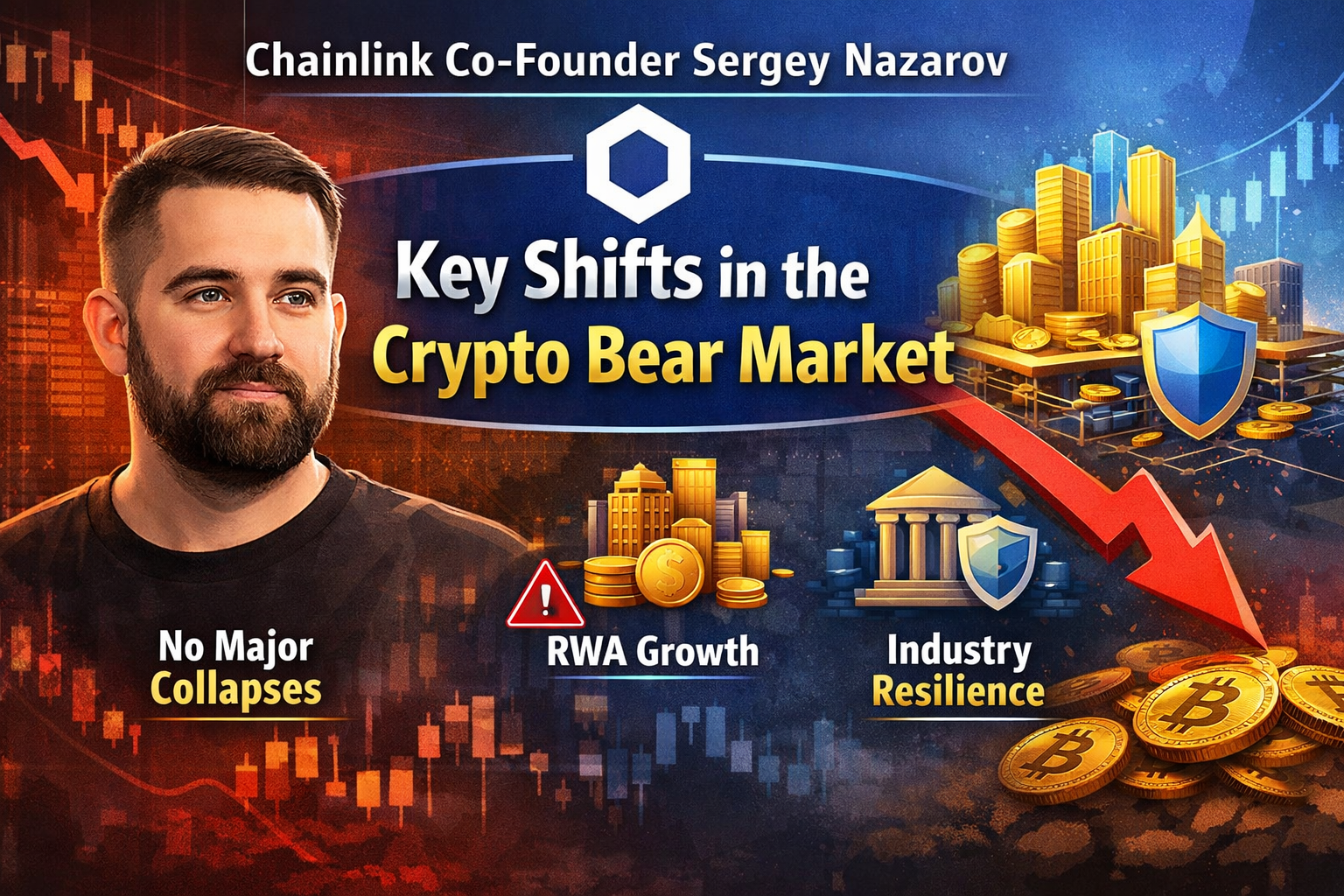
Chainlink co-founder Sergey Nazarov believes the current crypto bear market is fundamentally different from previous downturns, arguing that the industry has quietly matured beneath falling prices.
While crypto markets have suffered steep losses in recent months, Nazarov says the absence of major institutional failures and the rapid expansion of real-world asset (RWA) tokenization show that the ecosystem is stronger than ever. Instead of exposing structural cracks, this bear market is revealing how resilient blockchain infrastructure has become.
Crypto Market Faces Stress
The global cryptocurrency market has declined roughly 44% from its October all-time high of $4.4 trillion, erasing nearly $2 trillion in value in just four months. Bitcoin, Ether, and most major altcoins have remained under pressure as risk appetite weakens across global markets.
For many investors, such drawdowns evoke memories of past crypto winters marked by bankruptcies, fraud, and cascading collapses. However, Nazarov argues that this cycle tells a very different story.
Market cycles are inevitable, but what matters most is how the industry performs when stress levels rise. According to Nazarov, the crypto sector is now proving it can withstand volatility without triggering systemic failure.
No FTX-Style Collapses
One of the most significant differences in this bear market is the lack of major institutional blowups. Previous cycles, especially in 2022, were defined by the collapse of centralized exchanges, crypto lenders, and hedge funds, with FTX becoming the most infamous example.
This time, Nazarov notes, there have been no widespread risk management failures or large institutional implosions threatening the broader system.
“There have been no large risk management failures leading to large institutional failures or widespread systemic risks,” he said.
This stability suggests that exchanges, infrastructure providers, and major market participants have learned from past mistakes, improving transparency, custody practices, and risk controls. For institutional investors, this marks an important step toward long-term confidence in the crypto market.
RWA Tokenization Keeps Growing
The second major reason this bear market feels different is the explosive growth of real-world asset tokenization. Nazarov highlighted that on-chain RWAs and tokenized financial instruments continue to expand regardless of short-term crypto price movements.
According to RWA.xyz, the total on-chain value of tokenized real-world assets has surged more than 300% over the past 12 months. These assets include tokenized Treasury bills, commodities, private credit, and other traditional financial instruments.
Nazarov emphasized that this growth proves RWAs deliver standalone utility, independent of Bitcoin or altcoin speculation.
Real-world assets on-chain enable faster settlement, transparent collateral, programmable compliance, and global accessibility — benefits that traditional finance struggles to match.
LINK Price Under Pressure
Despite Chainlink’s central role in powering RWA infrastructure and blockchain oracle services, the price of LINK has not reflected this progress. The token is down approximately 67% from its October high and more than 80% below its 2021 all-time peak.
At the time of writing, LINK was trading below $9, hovering near bear-market lows. Nazarov’s comments highlight a growing disconnect between token prices and underlying adoption, a pattern increasingly common during market downturns.
For long-term observers, this divergence may signal that infrastructure value is being built quietly while market sentiment remains weak.
Infrastructure Demand Accelerates
Beyond RWAs, Nazarov pointed to on-chain perpetual contracts and tokenized traditional assets as key drivers of crypto’s next growth phase. These systems offer 24/7 trading, real-time settlement, on-chain collateralization, and automated risk management.
As tokenized assets grow more complex, demand for reliable data feeds, secure oracle networks, and automation will increase. Chainlink, which specializes in connecting blockchains with real-world data, stands to benefit from this trend.
Nazarov believes institutional adoption will be driven by this fundamental utility rather than speculative hype, reshaping how crypto integrates with global finance.
“If these trends continue, on-chain RWAs will surpass cryptocurrency in total value, fundamentally changing what this industry is about,” he said.
Analysts Share Similar View
Nazarov’s outlook is echoed by traditional market analysts. Bernstein analyst Gautam Chhugani recently described the current downturn as “the weakest Bitcoin bear case in its history,” arguing that no major structural failures have emerged.
“This is a crisis of confidence, not a crisis of infrastructure,” Chhugani wrote.
Jeff Mei, chief operating officer at BTSE exchange, added that the sell-off has been driven largely by external macroeconomic factors, including concerns around an AI-led stock market correction and tightening liquidity conditions.
Bear Markets Aren’t Equal
Taken together, the lack of institutional collapses and the rapid growth of real-world asset tokenization suggest that this bear market is fundamentally different from those that came before.
For Sergey Nazarov and other industry leaders, the current downturn is less about what is breaking — and more about what is continuing to grow.